Putin Proposes Humanitarian Operation in Kostiantynivka Similar to Oleshky
Vladimir Putin suggested a joint humanitarian mission in Kostiantynivka during talks with US envoys, claiming Russian control of the city despite Ukrainian assertions to the contrary.
By Vanessa Lopez ·
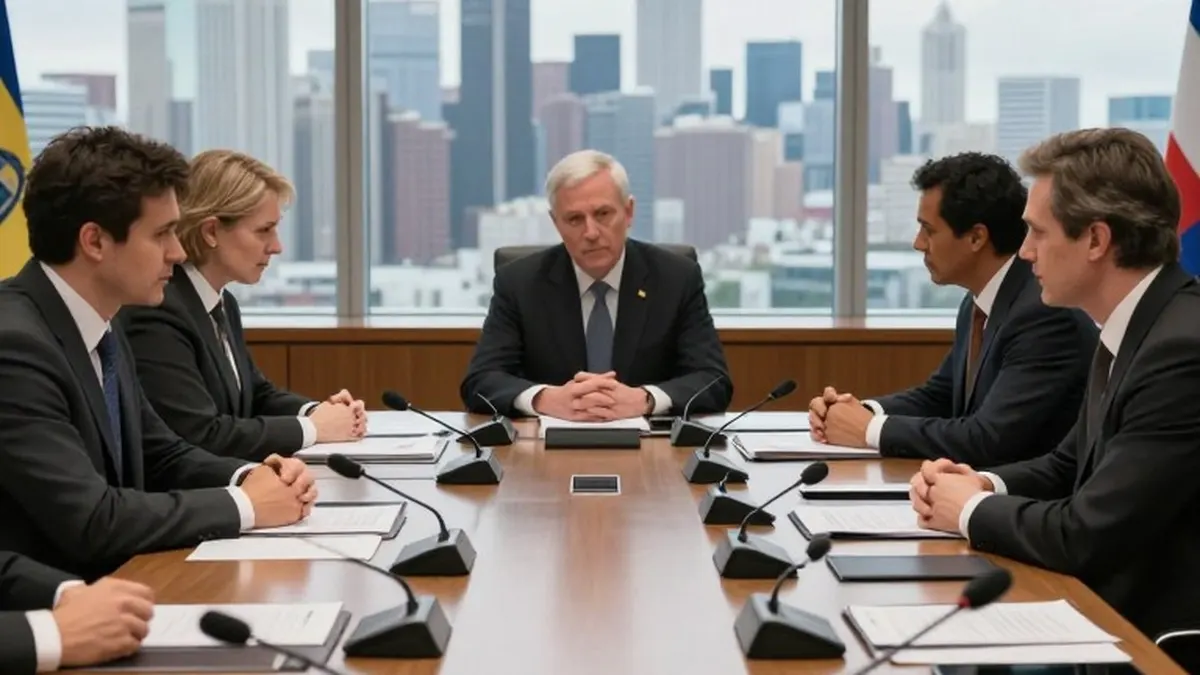
Russian President Vladimir Putin has put forward a proposal to launch a humanitarian mission in the city of Kostiantynivka, located in Donetsk Oblast. The plan mirrors the format used previously in Oleshky. Putin discussed this idea during a recent meeting with special envoys from the United States, Steve Witkoff and Jared Kushner. The Kremlin leader has maintained that Russian forces currently hold the city, a claim that was first made in July and has been disputed by Kyiv.
According to reports from RIA Novosti, a news outlet aligned with the Kremlin, Putin argued that Russian troops are prepared to guarantee the safety of such an operation. This stance persists despite earlier statements from Ukraine's General Staff, which declared that Putin's assertion of occupying Kostiantynivka was false. At the time of those initial claims, Ukrainian President Volodymyr Zelenskyy invited Putin to meet in the city itself, highlighting the discrepancy in how the two leaders view the status of the area.
Putin outlined specific details for the proposed operation, noting that approximately 400 to 500 civilians remain in Kostiantynivka. He suggested inviting representatives from foreign press, including American journalists, to observe the mission. The Russian leader stated that five days would be required to clear mines from the vicinity of the city. He proposed that the organization of the mission be handled by Russia's human rights commissioner, Yana Lantratova, and her Ukrainian counterpart, Dmytro Lubinets.
During the discussion, Putin added that if the Ukrainian authorities truly control the city as they claim, they should take responsibility for ensuring security. He emphasized the need for a coordinated effort that follows the precedent set by the Oleshky operation, aiming to demonstrate a collaborative approach to humanitarian aid in contested territories.
Ukraine has responded cautiously to the proposal. Dmytro Lytvyn, a communications adviser to President Zelenskyy, commented that all details of the plan need to be clarified. Lytvyn noted that the Oleshky operation revealed certain patterns in Russian conduct. Specifically, he pointed out that during the ceasefire in Oleshky, Russian occupation forces had returned to positions that Ukrainian defenders had spent nearly a year trying to push them out of.
Lytvyn suggested that the Russians' intentions for Kostiantynivka may follow a similar script to that observed in Oleshky. He noted that military equipment was brought in and troops were rotated under the cover of the humanitarian operation. While acknowledging the need for further clarification on the specifics, the Ukrainian side remains wary of the strategic implications behind the proposed mission.
The background of the Oleshky incident provides context for current skepticism. Oleksandr Prokudin, the head of the Kherson Oblast Military Administration, previously reported on developments during the ceasefire there. He stated that Russian forces used the period to reposition and reclaim ground that had been secured by Ukrainian units over an extended period of fighting.
As negotiations continue, the proposed mission in Kostiantynivka serves as a focal point for discussions between the Russian and Ukrainian leadership, mediated in part by American envoys. The outcome of these talks will likely influence how both sides approach future humanitarian operations in areas where control is contested and claims of occupation remain a subject of intense debate.
The involvement of high-level officials from both nations, along with international observers, underscores the significance of the Kostiantynivka proposal. Both sides are expected to scrutinize the operational details to ensure transparency and verify the actual military status of the city before any large-scale humanitarian effort begins.
In the interim, the focus remains on the logistical and security aspects of the plan, including mine clearance and the role of human rights commissioners. The success of the mission will depend on the level of trust established between the parties and the clarity with which operational details are defined and executed.