Spain's First General Strike in 14 Years Targets Housing Crisis
Millions of workers and citizens across Spain halted economic activity and marched in major cities to demand relief from soaring rents and real estate speculation.
By Vanessa Lopez ·
Spain experienced its first nationwide general strike in 14 years on Wednesday, November 11, as millions of workers shut down businesses and public transportation. The walkout, organized under the slogan Salaries. Housing. Prices., marked a significant escalation in the country's struggle against rising living costs. It was the first general strike in the nation's recent history driven primarily by unrest over the housing market.
The strike disrupted the eurozone's fourth largest economy, with public transit, schools, and universities ceasing operations for the day. While many large businesses closed, smaller establishments such as coffee shops remained open. In Barcelona, the metro and bus services stopped running outside of rush hour, resulting in light street traffic. Across the country, approximately five percent of flights were cancelled, according to the airport operator AENA.
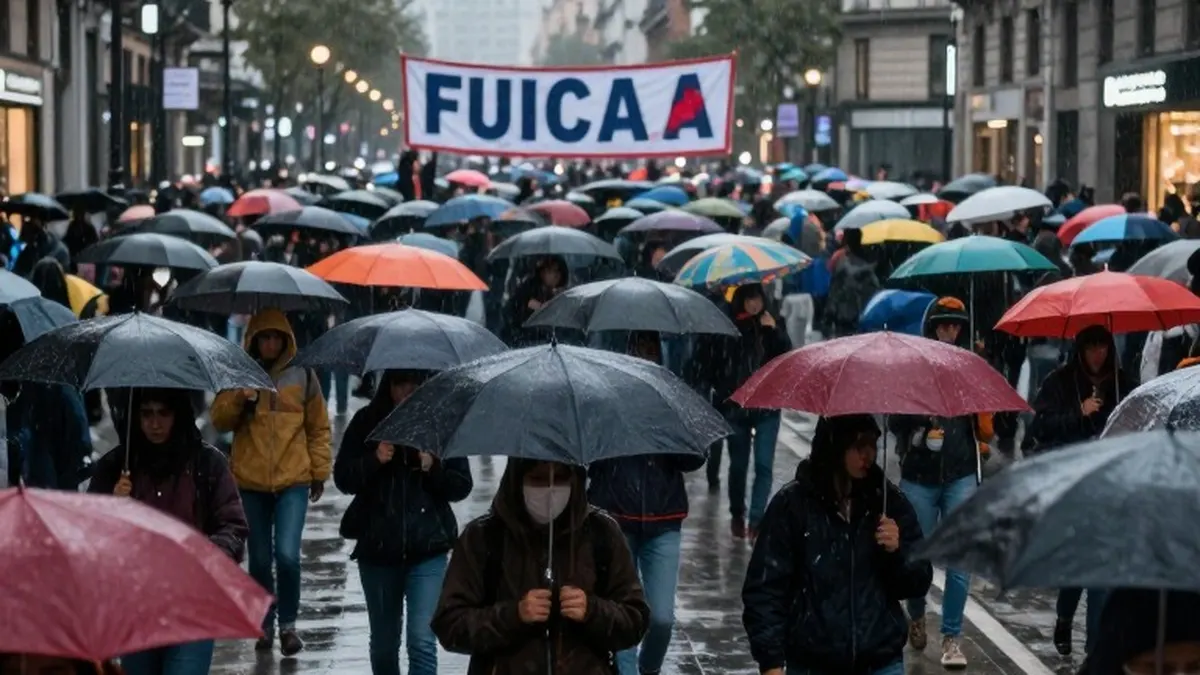
Protests culminated in large gatherings in the capital, Madrid, and the major city of Barcelona, despite pouring rain. Housing activists reported that 400,000 people marched in Barcelona, while the city government estimated the turnout at 55,000. Demonstrators carried a large banner reading Live. Not Just Survive. In Madrid, officials estimated that 120,000 people turned out, creating a sea of umbrellas on the Paseo del Prado boulevard.
The movement was led by a grassroots group of housing activists, largely composed of younger people who have felt the financial strain of the housing market firsthand. Valeria Racu, a housing activist, stated that the strike was directed against rent seekers, real estate speculators, and large property companies. She emphasized that the group intended to set its own agenda regardless of which political party holds power.
Tensions rose in some areas as the day progressed. In Barcelona, some protesters smashed storefronts along Paseo de Gracia, a main shopping boulevard. Small bonfires were set, and fireworks were launched at police who arrived in riot gear. In other locations, police used pepper spray, and 49 arrests were made across Spain for incidents related to the strike. Unions reported scuffles near the main wholesale market on the outskirts of Madrid.
Personal stories highlighted the urgency of the crisis. Almudena Lopez, a 74-year-old protester in Madrid, spoke about her 43-year-old son who still rents a small room in a shared apartment because he cannot afford to buy a home. She noted that previous generations could manage with a degree and some savings, a luxury that is no longer common.
Carlos Ferrer, a customer service worker attempting to travel from Barcelona to Alicante, argued that radical measures like a general strike are necessary to force authorities to act. He believed citizens must apply pressure to prompt change in the government's approach to housing and wages.
The two major unions, CCOO and UGT, declared the strike a success. Unai Sordo, secretary-general of CCOO, said participation exceeded expectations. The unions reported stoppages of 90 percent in the automotive and port sectors, 85 percent in the meat industry, 82 percent in waste collection, and 75 percent in the energy sector.
In contrast, the leading business owners group, CEOE, called the strike a failure, citing an overall participation rate of only five percent. Both unions and business leaders agreed that worker participation was highest in heavy industry and transportation, while it lagged in retail and restaurants.
The strike comes at a critical political moment. The average rent in Spain has nearly doubled in the last decade. The anger was further fueled by the eviction and subsequent death of Maricarmen, an 87-year-old woman who became a symbol of the housing crisis. Prime Minister Pedro Sanchez has called for an early election on November 29, hoping to secure four more years in power for his left-wing coalition amid these economic challenges.