Iran Escalates Retaliation Against Gulf Allies After U.S. Strikes Qeshm Island
Bahrain and Kuwait intercepted Iranian drone strikes following U.S. attacks on Qeshm Island, while Iraq resumes oil exports to Turkey to bypass the Strait of Hormuz.
By Vanessa Lopez ·
Gulf states Bahrain and Kuwait reported on Wednesday that they successfully intercepted retaliatory strikes from Iran. This development follows U.S. military actions targeting Iran's Qeshm Island in the Strait of Hormuz. The sequence of events marks a significant intensification of hostilities, with Iran claiming it targeted U.S. radar systems three times in three days.
The U.S. launched precision strikes on an Islamic Revolutionary Guard Corps missile site located on Qeshm Island on Tuesday. A U.S. military official described the operation as a measure of self-defense. The official stated that the strike was a direct response to aggression by the IRGC targeting U.S. personnel and assets. U.S. Central Command emphasized its vigilance and readiness to protect Americans throughout the region.
The timing of the U.S. strikes was significant, occurring hours after Iran announced it had targeted a U.S. radar system in Bahrain. According to U.S. officials, this was the third attempted Iranian strike on a U.S. military installation within the last five days. All of these attacks were reportedly intercepted by U.S. forces.
In response to the U.S. action, the Iranian army announced that its drones targeted Patriot air defense systems and missile launch platforms at Ali Al-Salem Air Base in Kuwait. The statement was carried by state television IRIB. Kuwait’s military confirmed that its air defenses were responding to hostile drone threats and urged the public to follow safety guidelines.
Kuwait’s foreign ministry issued a statement on social media condemning the attacks. The ministry described the continuation of strikes as a dangerous escalation that threatens regional security and stability. It also noted that these actions undermine ongoing diplomatic efforts aimed at de-escalation.
Bahrain reported that its air defenses intercepted attacks early Wednesday. This came one day after Tehran’s Revolutionary Guard claimed it struck a base used by the U.S. military. The coordinated responses from both nations highlight the expanding scope of the conflict into neighboring Gulf territories.
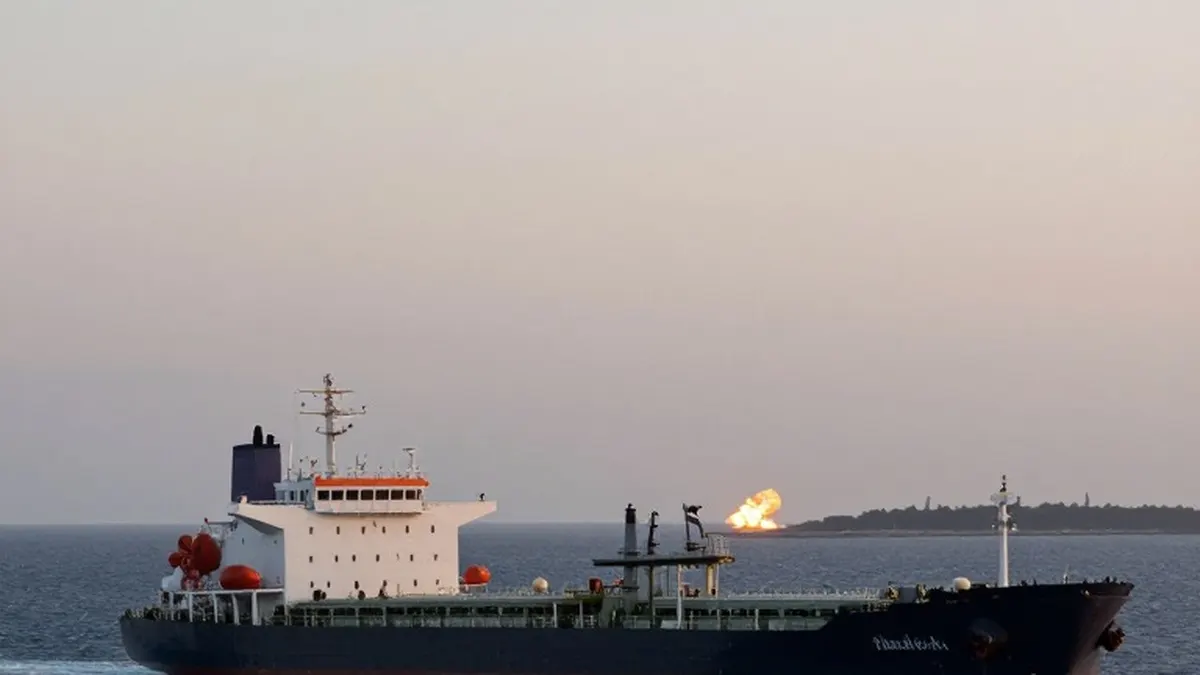
Maritime operations in the Strait of Hormuz have also been affected. The Abu Dhabi National Oil Company, known as ADNOC, reported that one crew member was missing from a vessel struck on Tuesday. The company stated that eleven other crew members were injured and receiving medical care. Search and rescue operations were still ongoing as of Wednesday.
Monitoring agencies report that ships are being attacked in or near the Strait of Hormuz on a near-daily basis. Iran claims responsibility for some of these attacks, citing that the vessels were transiting the waterway without permission. The U.S. military has also struck ships it deems to be violating its naval blockade on Iranian ports.
To mitigate the impact of disruptions in the Strait of Hormuz, Iraq resumed pumping oil to Turkey through a pipeline on Tuesday. Oil Minister Bassem Mohammed Khudair al-Abadi said the initial capacity is 120,000 barrels per day. He indicated that this capacity will be gradually increased to reach 500,000 barrels per day.
The Iraq-Turkey pipeline, which has been largely idle since 2023 due to legal and commercial disputes, is being revitalized to strengthen oil export infrastructure resilience. While the current capacity is smaller than regional alternatives, it provides an alternative route to the Mediterranean port of Ceyhan, avoiding the contested strait.