Gen Z Protests Reshape Global Politics
Youth-led protests are driving political change in Brazil, Serbia, and across Europe, signaling a global shift as Gen Z challenges established power structures.
By Marina Weber ·
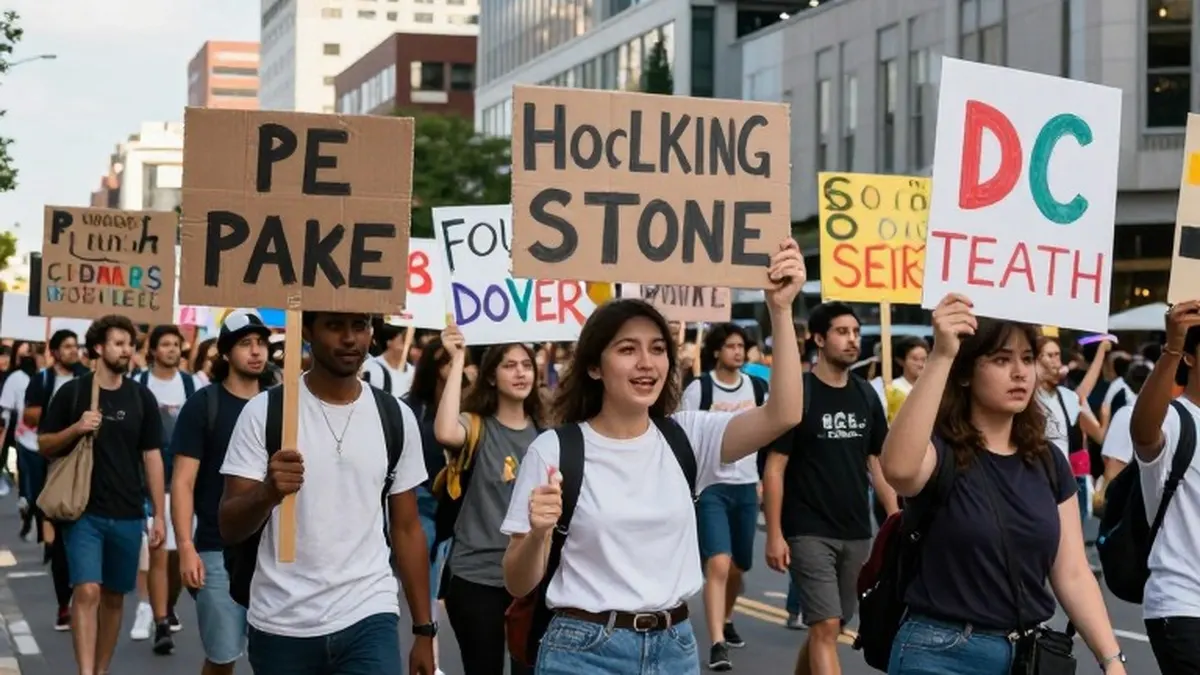
A coordinated wave of youth-led demonstrations is currently transforming political landscapes across the globe. These movements, which have gained significant international attention in recent months, are driving electoral changes and challenging authoritarian regimes. The protests represent a broader shift where young people, roughly those aged 14 to 29, are moving from the sidelines to the forefront of political action.
Erica Chenoweth, a political scientist at the Harvard Kennedy School, describes this trend as a global political awakening. She notes that a large proportion of this generation is frustrated with failing political systems. Researchers have identified at least 25 such protests worldwide, spanning from Bangladesh to Belgium and Italy to India. The motivations vary, including demands for affordable housing, educational investment, and action on climate change, but the core driver is a sense of political disenfranchisement.
The momentum for these movements began in Asia and Africa. In 2024, students in Dhaka, Bangladesh, initiated what was described as the first successful revolution led by this generation. Initially focused on a quota law, the unrest expanded into a broader revolt against the autocratic rule of Prime Minister Sheikh Hasina. Following two months of protest, Hasina resigned and fled the country by helicopter, chased out by young demonstrators.
A similar dynamic unfolded in Serbia, where students organized against a government that had consolidated control over media and institutions. Through cycling across Europe and running ultramarathons, they maintained pressure on the state. Their efforts culminated in the recent election that ousted President Aleksandar Vučić, ending his party’s 14 year tenure in power.
In Brazil, the combination of street protests and digital mobilization played a crucial role in the recent presidential election. After a first round loss to Flávio Bolsonaro, the political left rallied around Luiz Inácio Lula da Silva. Students at Fluminense Federal University started pro Lula marches that spread nationwide. A WhatsApp channel called Lula's Army, created by ally André Janones, helped amplify content and boost support, contributing to Lula's eventual victory.
The infrastructure of modern mobilization has accelerated these grievances. Analysts note that platforms like TikTok and X amplify discontent, while Discord servers and group chats allow for decentralized planning. Virtual private networks help organizers bypass internet shutdowns. This digital and physical synergy has been a defining feature of the current wave of activism.
In Europe, the movement has recently expanded to include school students in France demanding better working conditions, youth in Spain pitching tents for affordable housing, and thousands in Germany protesting cost of living issues. A group calling itself Gen Z regelt! organized the German protests, highlighting a shared frustration with the breakdown of the social contract.
India has seen its own surge in youth activism through the Cockroach movement, which began as online satire and evolved into a significant force against the government of Narendra Modi. The movement successfully forced the resignation of the education minister this summer. However, it has also faced heavy repression, with thousands detained and protests met with teargas and physical force in central Delhi.
Repression is a common theme in these global uprisings. In Morocco, over 2,000 people were charged after the Gen Z 212 movement targeted corruption, while in Mexico, youth protests over crime led to police clashes. In France, lawyers report that teenagers have suffered severe injuries from police weapons. Civicus, a global monitoring group, links the state violence to the fact that these protests question the fundamental distribution of economic and political power.
Despite the challenges, the organizing power of this generation continues to grow. In the US, campaigns like Zohran Mamdani’s for New York mayor have integrated young volunteers, turning political engagement into a social experience. Chenoweth suggests this wave may mark a profound generational transformation capable of countering democratic backsliding. As one 17 year old student in Paris told the Associated Press, the core issue is that young people are often treated like children and not listened to enough.