Karak Church Attack: Jordanian Officials React to Deadly Funeral Shooting
Seven people were killed and forty injured when gunmen opened fire at a Greek Orthodox service in Jordan, prompting a national mourning declaration and regional diplomatic responses.
By Marina Weber ·
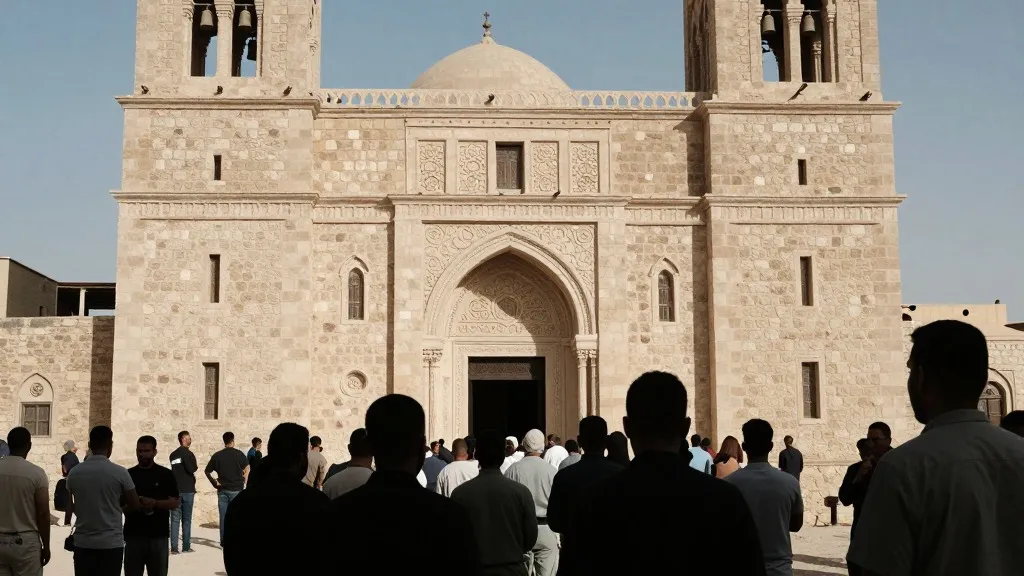
Jordanian authorities confirmed that seven individuals were killed and forty others wounded after gunmen launched an assault on a funeral service at a Greek Orthodox church in the town of Karak. The incident occurred on Friday in a location situated approximately ninety kilometers south of the capital, Amman. State television broadcasted footage showing the approach to the building, where two men carrying pistols were seen firing before a third individual, appearing to hold a semiautomatic rifle, joined the shooting. The three assailants then moved toward the church entrance, a sequence that witnesses captured on video, which also showed shattered glass and blood on the floor inside.
Dorgham Halasa, a mourner present during the service, described the sudden outbreak of intense gunfire roughly fifteen minutes after the funeral commenced. He noted that the situation was chaotic as people attempted to flee the scene. Although Halasa did not see the attackers directly, he reported that other attendees believed they had spotted four individuals. The Associated Press was unable to independently verify the exact number of assailants, and Jordanian security services did not immediately release specific details regarding the group's size.
In an official statement, the government characterized the incident as an act carried out by unknown assailants. While no confirmation was given that any of the gunmen had been captured or killed, officials stated that investigations were proceeding at full speed. Following the tragedy, the kingdom declared three days of national mourning, as reported by the Petra News Agency. Health Minister Ibrahim al-Budour added that two of the wounded patients were in critical condition, highlighting the severity of the injuries sustained during the attack.
King Abdullah II addressed the nation via the social media platform X, declaring that Jordan would confront the terrorist act with the harshest penalties. He extended his deepest condolences to the families of the deceased and expressed wishes for the recovery of those injured. Prime Minister Jafar Hassan, who spoke at a security meeting in Karak on Friday evening, attributed the attack to terrorist ideology and blind extremism. He emphasized that legal measures would be taken against those seeking to introduce such extremism into the country, and that the attackers would be punished.
The town of Karak has a history of deadly violence and is home to a minority Christian population. In 2016, the area experienced a series of ambushes by gunmen targeting police, including an attack at a popular Crusader castle. That previous incident resulted in ten deaths, seven of whom were officers, and left dozens wounded. Security forces eventually resolved that standoff by killing the gunmen. The recurrence of violence in the region has raised questions about the security landscape in this part of Jordan.
Condemnation for the shooting arrived from across the Middle East, with officials from Lebanon, Syria, Egypt, and Oman expressing their sorrow. In Cairo, Ahmed al-Tayeb, the grand imam of Al-Azhar, described the shooting as a heinous terrorist attack. He offered condolences to the victims' families, underscoring the religious and cultural significance of the site of the attack. The reaction from the broader Sunni Muslim world highlighted the widespread shock over the incident.
Iraqi Foreign Minister Fuad Hussein also responded to the tragedy by phoning his Jordanian counterpart. His office stated that the call affirmed Iraq's solidarity with Jordan in the face of terrorism. This diplomatic move signaled a unified regional stance against the violence, with neighboring countries offering support to the Jordanian government as it managed the aftermath of the attack.
United Nations Secretary-General Antonio Guterres issued a statement condemning the attack, calling it especially heinous due to the fact that it took place during a funeral. According to his spokesman, Stephane Dujarric, the secretary-general called for all those responsible to be found and held to account. The international response reflects the gravity with which the global community views attacks on places of worship and during moments of communal mourning.
As Jordan continues its investigation, the focus remains on identifying the perpetrators and understanding their motives. The declaration of national mourning underscores the impact of the event on the Jordanian public. The combination of local historical context and immediate regional reactions provides a comprehensive picture of the current security and diplomatic environment surrounding the incident in Karak.