New Blood Test Detects Early Breast Cancer with 95 Percent Accuracy
An international team led by Israeli researchers has developed a diagnostic tool that identifies early-stage breast cancer and predicts recurrence risks using epigenetic markers found in the blood.
By Amir Navarro ·
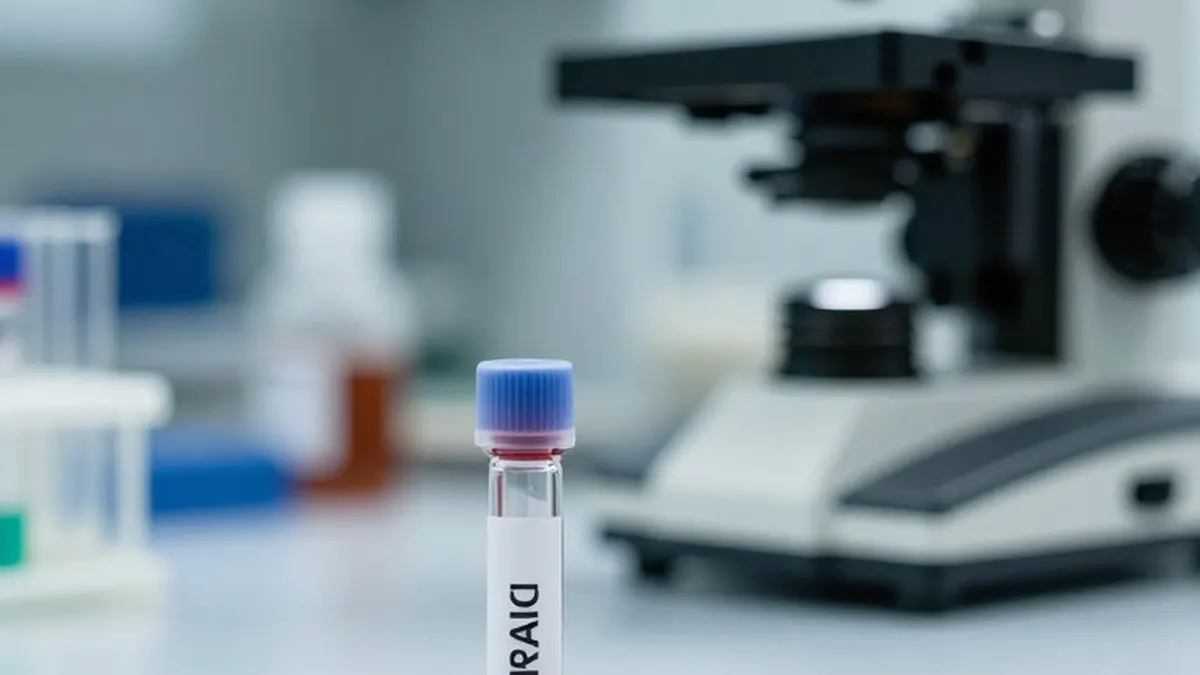
Researchers from the Weizmann Institute of Science and the Hebrew University of Jerusalem have developed an experimental blood test capable of detecting early-stage breast cancer with 95 percent accuracy. The test is specifically designed to identify localized tumors that measure less than two centimeters, a size equivalent to approximately 0.8 inches. The findings were published in the journal Nature on Wednesday, marking a significant advancement in cancer diagnostics.
The project emerged from a collaboration between Dr. Efrat Shema’s laboratory at Weizmann, Prof. Guy Ron at Hebrew University, and physicians at Kaplan Medical Center in Rehovot. Scientists from France, Germany, Italy, and the United States also contributed to the research. The team focused on mapping the epigenetics of breast tumors, which are molecular switches that control gene behavior without altering the underlying genetic code.
Dr. Shema noted that while regular mammograms reduce the risk of dying from breast cancer by 22 percent, dense breast tissue can make tumors difficult to detect in imaging. The new blood test demonstrated strong diagnostic performance regardless of breast density. When the study expanded to include blood samples from 188 patients with assistance from Kaplan and Sheba medical centers, the test performed consistently across different types of breast cancer.
According to the World Health Organization, roughly 2.3 million women were diagnosed with breast cancer globally in 2022, resulting in 670,000 deaths. In Israel, the Israel Cancer Association reports that about 4,500 women are diagnosed annually, with approximately 900 deaths from the disease. Currently, tumors are classified based on gene expression patterns, but the epigenetic tags governing these patterns had remained largely unmapped until this study.
To study these markers, researchers including Dr. Noa Furth and Dr. Christina Riemenschneider worked with tissue samples from 12 women scheduled for surgery. Speed was critical because epigenetic tags deteriorate quickly after a tumor is removed. Furth described rushing tissue samples on ice from the hospital to the lab to begin analysis immediately. The team then sought to identify the same markers circulating in the blood by focusing on nucleosomes, which are microscopic packages of DNA released when cells break down.
The methodology involved placing blood samples on specialized glass slides and treating them with fluorescent antibodies that recognize distinct chemical tags on these nucleosomes. Using high-resolution single-molecule fluorescence microscopy, the system scanned millions of these structures individually. Each tag was illuminated in a distinct color, creating a visual map of active and inactive molecular switches. Advanced computational algorithms and artificial intelligence were then used to isolate the specific patterns associated with malignant tumors.
The team validated the method by testing blood samples from 77 breast cancer patients who had been followed for at least five years at the Mayo Clinic in Florida. These were compared with samples from 30 healthy women. The artificial intelligence models achieved 95 percent accuracy in distinguishing between the two groups when the cancer was in its early, confined stage.
The research also addressed the issue of cancer recurrence, which occurs in 20 to 40 percent of cases even after successful treatment. The scientists discovered that aggressive cell populations often emerge within tumors, driven by epigenetic changes. Dr. Shema explained that these cells exploit their epigenetic flexibility to become more aggressive and evade treatment. The study found that the prevalence of a specific epigenetic signature in blood samples correlated with a higher risk of recurrence.
Using this signature along with additional markers, the researchers could distinguish between patients who experienced a recurrence and those who did not with 81 percent accuracy. The test was even able to flag recurrence risks in patients who were considered low risk by conventional measures. The findings, supported by the Swiss Society Institute for Cancer Prevention Research and Spain’s Fundación Alberto Palatchi, suggest new avenues for therapy by tracking aggressive cell populations.
The team believes these findings could help predict and potentially prevent recurrence in the future. They are now looking for treatments that could deprive cancer cells of their epigenetic flexibility or coax aggressive cells to adopt less aggressive traits. This approach could open new pathways for managing various types of cancer by monitoring the behavior of aggressive cell populations over time.