ICRC President warns of record high number of armed conflicts since World War II
Mirjana Spoljaric states that the organization is classifying more active wars than at any point since the 1940s, citing new technological challenges and diplomatic retreats.
By Vanessa Lopez ·
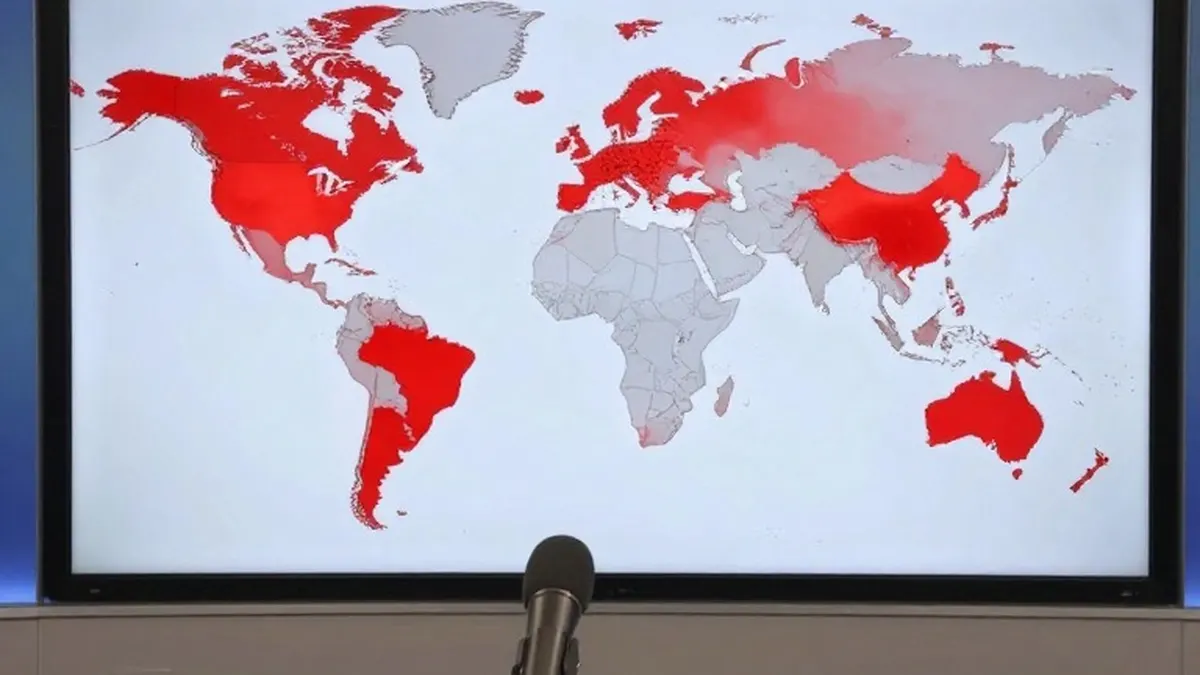
The International Committee of the Red Cross is currently tracking the highest number of armed conflicts since the end of the Second World War. Mirjana Spoljaric, the President of the organization, highlighted this alarming statistic during a recent appearance on France 24. She emphasized that while war may be a persistent feature of human history, the extreme brutality often associated with it is not an inevitable condition of humanity.
Spoljaric drew attention to the core principles established by the Geneva Conventions of 1949. These international rules were designed to ensure that even during wartime, there remains a framework of law and specific boundaries that must not be crossed. Her comments serve as a stark reminder that the protection of civilians and the restraint of military actions are fundamental obligations, not optional choices.
The ICRC leader argued that the international rules meant to shield non-combatants are being progressively weakened. This erosion is happening amidst a backdrop of proliferating wars, rapid technological changes, and a noticeable retreat of diplomatic efforts. She pointed to ongoing conflicts in Gaza, Ukraine, Sudan, and Yemen as examples of an increasingly permissive interpretation of international humanitarian law.
In these regions, civilian infrastructure is frequently targeted, and populations are forcibly displaced. Spoljaric noted that human suffering is often being used as a tool within military strategy. She stated that humans are being instrumentalized in the pursuit of specific military objectives, a trend that undermines the basic protections afforded to those not directly participating in hostilities.
The rise of new technologies presents another layer of complexity. The widespread use of drones and artificial intelligence has added a troubling dimension to modern warfare. Technologies that were initially presented as tools for greater military precision have not always delivered the promised level of protection for civilians. Instead, they risk making it harder for people to escape violence.
Spoljaric also raised urgent legal and ethical questions regarding the prospect of autonomous weapons. The idea of machines targeting human beings without direct human control poses significant challenges to existing frameworks of accountability and protection. This technological shift requires a reevaluation of how rules of war are applied and enforced in contemporary conflicts.
Beyond the immediate battlefield, the ICRC President expressed deep concern about the broader geopolitical landscape. As conflicts increasingly cross national borders and humanitarian needs overwhelm available resources, diplomacy has often taken a back seat to the principle that might makes right. This shift threatens the long-term stability of the international order and the capacity to resolve disputes peacefully.
Her message carries a strong political dimension, asserting that humanitarian assistance cannot simply substitute for the prevention of war. The protection of civilians cannot rely solely on the goodwill of warring parties. Spoljaric insisted that the responsibility for maintaining the rules of war belongs to both governments and citizens.
She urged citizens to demand that their governments prioritize the rules of war in their foreign and domestic policies. Spoljaric warned that the impact of distant conflicts is now felt much faster and more directly by populations than in previous decades. This proximity means that the consequences of war are no longer abstract, but a pressing reality for many people around the world.
The ICRC's assessment underscores a critical need for renewed commitment to international humanitarian law. As the number of active conflicts reaches historic highs, the organization calls for a collective effort to uphold the red lines that distinguish civilized warfare from total war. The coming months will be crucial in determining whether the international community can adapt to these new challenges and protect the most vulnerable.