SpaceX receives approval for one million orbital AI data center satellites
The US Federal Communications Commission has authorized SpaceX to deploy a massive constellation called Starmind, a move that has sparked significant debate regarding energy efficiency, environmental impact, and technical feasibility.
By Vanessa Lopez ·
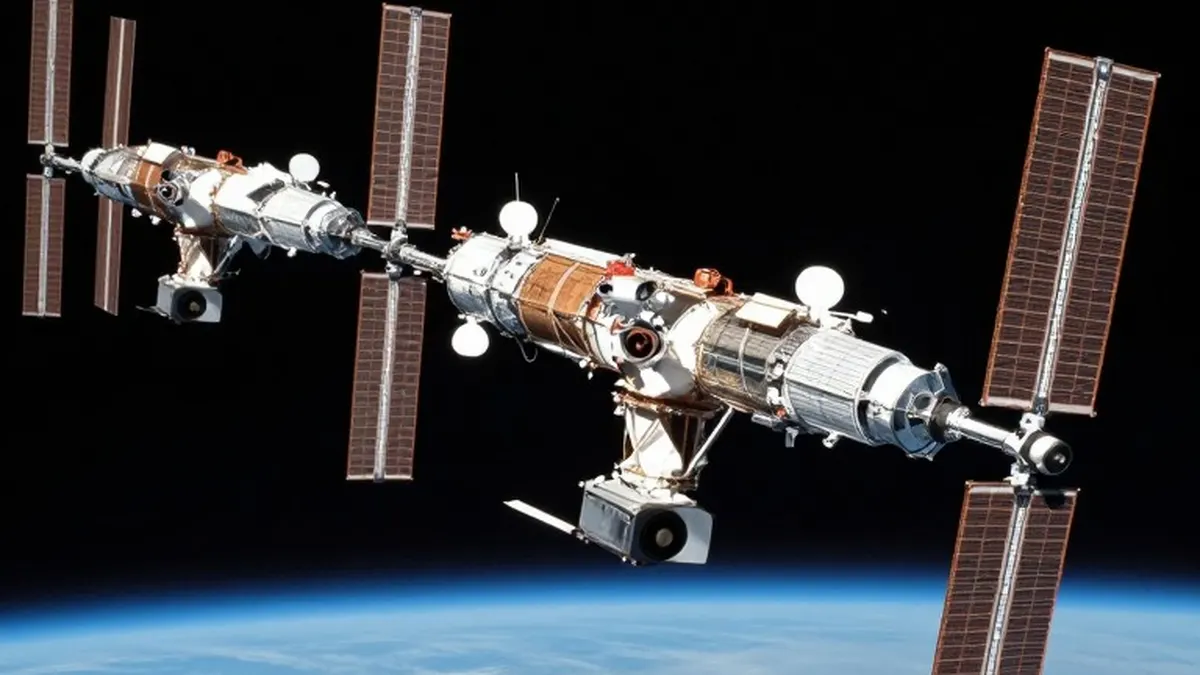
Elon Musk’s aerospace company SpaceX has secured official permission from the US Federal Communications Commission to construct a network of one million satellites. This ambitious initiative, designated as Starmind, aims to host artificial intelligence data centers in space. The approval comes with a strict schedule that requires the company to place 100,000 satellites in orbit by 2035. By 2038, the number must increase to 500,000, with the full constellation of one million expected to be operational within 15 years to address the surging demand for AI computing power.
Proponents argue that space offers distinct advantages for housing data infrastructure. Ulrich Speidel, a computer scientist at the University of Auckland, noted that satellites benefit from high availability of solar energy. Depending on their orbital path, these units would receive sunlight for more than half of the day without obstruction from clouds. SpaceX emphasizes that this setup leverages abundant energy and cooling opportunities, thereby reducing the strain on terrestrial resources.
The growing energy consumption of AI data centers on Earth is a primary driver for this shift. The International Energy Agency projects that their electricity usage could more than double, reaching 945 terawatt-hours annually by 2030. Additionally, terrestrial data centers require vast amounts of water for cooling, with global consumption estimated between 313 billion and 764 billion liters. Since about a quarter of these facilities are located in regions prone to water shortages, moving them to space could alleviate this pressure.
However, experts highlight that cooling remains a significant technical hurdle in the vacuum of space. Speidel explained that heat can only be removed by radiating it away, as air and water cooling are not viable options. Richard Easther, a physicist at the University of Auckland, described the project as being at the edge of technical feasibility. While he acknowledged plausible solutions consistent with basic physics, he compared the initial skepticism surrounding Starlink to the current doubts about Starmind.
Critics argue that the FCC’s timeline is unrealistic. Laura Revell, a professor of atmospheric chemistry at the University of Canterbury, stated that meeting the deadline would require launching approximately eight satellites every hour until November 25, 2040. This frequency of launches raises concerns about atmospheric pollution. Revell expressed worry that rocket emissions could accelerate the depletion of the ozone layer, potentially undoing decades of protective efforts.
The environmental impact extends to the satellites themselves. Typically decommissioned after five years, they burn up during reentry, which Revell described as turning the atmosphere into a crematorium for satellites. The long term effects of the resulting vaporized metals on the climate and ozone layer remain largely unknown. Furthermore, the project would increase active orbital satellites by more than 50 times, significantly raising the risk of collisions and potentially triggering the Kessler syndrome, a cascade of debris that could render low Earth orbit unusable.
Astronomers are also concerned about the impact on the night sky. The Starmind satellites will feature large solar panels to support their cooling systems. Easther warned that these structures could have devastating effects on astronomical observations and alter the visual experience of the night sky for the general public.
The FCC’s decision was made without extensive global consultation, with the agency dismissing environmental concerns as outside its purview. Revell questioned the authority responsible for protecting the upper atmosphere for the common good. She emphasized that safeguarding the atmosphere should not be left solely to a profit driven company, highlighting the broader implications of this rapid expansion in space infrastructure.