Harvard analysis sets 10,000-person limit for sustainable lunar settlements
Researchers found that existing water reserves on the moon cannot support mega-cities for long, challenging recent claims by major space executives.
By Marina Weber ·
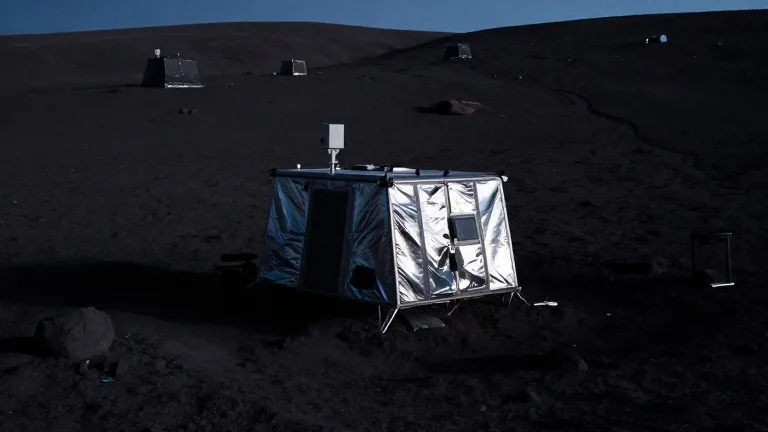
A new study published in the journal Frontiers in Space Technologies suggests that permanent human settlements on the moon will likely be capped at small towns rather than sprawling metropolises. The analysis by Martin Elvis of the Smithsonian Astrophysical Observatory at Harvard University and Jonathan McDowell of Durham University indicates that water availability, not power, is the primary constraint for long-term habitation.
The research responds to public statements by industry leaders. In February, SpaceX chief Elon Musk announced a shift in strategy from Mars to building a self-growing lunar city within ten years. Separately, Blue Origin head Jeff Bezos predicted that millions of people would live in space by 2045. The physicists tested these ambitions against current estimates of lunar resources, specifically examining energy generation and water supply.
Energy requirements appeared manageable. The authors determined that solar and nuclear systems could theoretically power a population of one million people. Water reserves, however, present a tighter limit. Current estimates suggest approximately one billion tonnes of water exist in permanently shadowed regions near the lunar poles. Under ideal conditions, including a 98 percent recycling rate comparable to that of the International Space Station, this supply would sustain one million residents for roughly one century.
Elvis described the available water as modest, comparing the volume to an aquarium the size of Central Park filled until the Statue of Liberty was submerged. He noted that such a small reservoir cannot support a large city for an extended period. In contrast, a settlement of 10,000 people would remain sustainable for centuries under the same assumptions.
The study’s baseline figures may be optimistic. Elvis argued that the one billion tonne estimate is likely 20 to 30 times too high. He further suggested that only one-third to one-half of the water would be recoverable, with his best guess indicating that just one percent of the original figure is reliable. This adjustment would reduce the sustainable duration for a million-person city from 100 years to approximately one year.
Gordon Osinski, a planetary geology professor at Western University in London, Ontario, cautioned that satellite measurements contain uncertainties. He believes the water exists but requires on-ground confirmation. He noted that the water may resemble Arctic permafrost, consisting of sub-millimetre ice crystals mixed into soil, which makes extraction difficult.
McDowell emphasized that the findings clarify logistical challenges without negating the feasibility of lunar expansion. He stated that the truth is never negative and that attempting a project that does not work is the only negative outcome.
Source: CBC News