Joint Expeditionary Force emerges as a key security option for Ukraine
Ukraine is exploring deeper integration with the UK-led Joint Expeditionary Force as a practical path to securing military guarantees and strengthening European defense capabilities.
By Marina Weber ·
Ukraine’s pursuit of NATO membership remains a central focus of its foreign policy, yet the path to full accession is complicated by the need for unanimous agreement among all 32 member states. While Ukrainian forces have gained significant combat experience that is now studied by Western militaries, the geopolitical nature of NATO leaves membership prospects uncertain. In response, attention is turning to the Joint Expeditionary Force, a UK-led military coalition that is increasingly viewed as a vital security partner for Kyiv.
The Joint Expeditionary Force, often described as a Northern NATO, was established in 2014 under the Framework Nations Concept. It currently comprises ten NATO members, including the United Kingdom, Finland, Sweden, Norway, Denmark, Iceland, Estonia, Latvia, Lithuania, and the Netherlands. Unlike NATO, JEF allows each nation to decide independently whether to participate in specific operations, providing a flexible framework for rapid deployment and joint action.
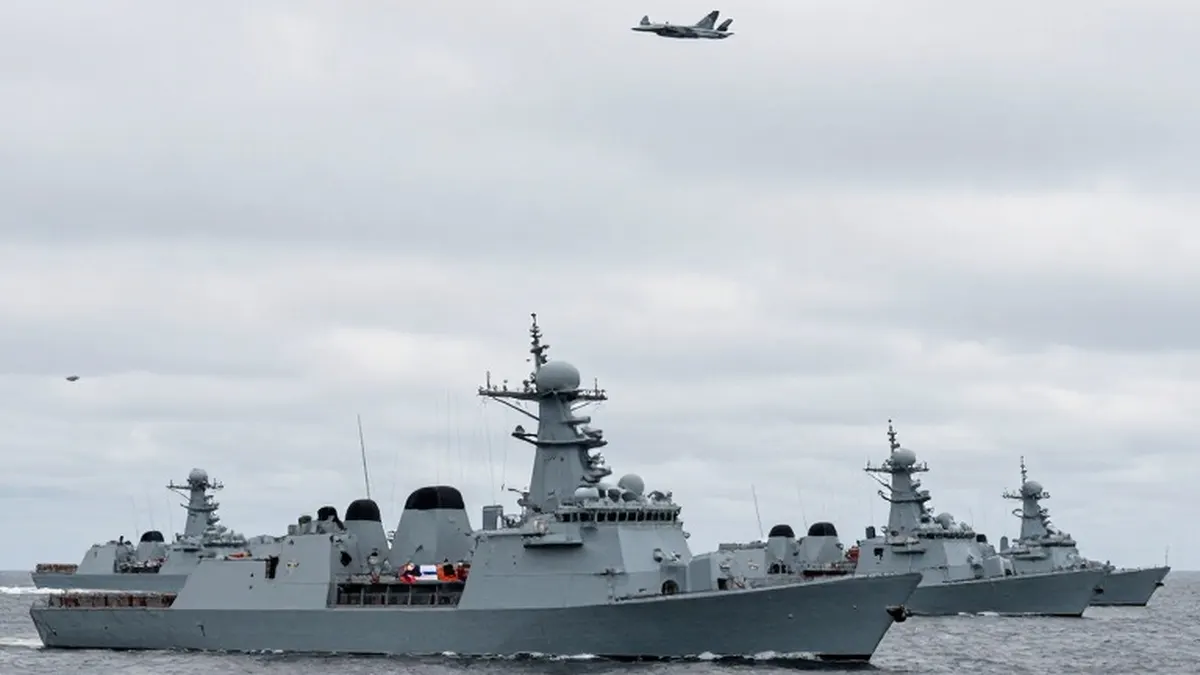
This coalition has moved beyond theoretical planning to active operations. Following damage to the Estlink 2 underwater power cable in January 2025, JEF launched Operation Nordic Warden. From its headquarters in Northwood, UK, the alliance now monitors 22 strategic maritime areas using artificial intelligence to detect suspicious vessels and protect critical infrastructure. This effort runs parallel to NATO’s own Baltic Sentry mission, which aims to bolster naval presence in the region.
Recent military exercises have demonstrated the coalition’s growing operational capacity. In August 2026, JEF conducted LION PROTECTOR 26 across the Baltic Sea, North Atlantic, and Arctic regions. During the BALTIC EXPRESS phase, Danish, Latvian, Swedish, and British forces escorted a vessel carrying heavy equipment to Latvia. Subsequent drills in Norway and the Faroe Islands focused on rapid headquarters deployment and amphibious landings, highlighting the group’s ability to respond quickly to threats in Northern Europe.
A significant development occurred in October 2026 when the United Kingdom proposed extending its nuclear umbrella to JEF members under a broader defense agreement. This pact, potentially to be signed at a November summit in Oslo, would offer an additional layer of security guarantees independent of NATO’s Article 5. This move reflects a broader European trend of strengthening collective defense mechanisms without relying solely on the United States.
Ukraine already holds a unique position within this structure. In November 2025, Kyiv was granted Enhanced Partnership status, a designation previously reserved for the ten member states. This status has facilitated Ukrainian participation in joint exercises, where partners have expressed strong interest in Ukraine’s expertise in drone warfare, electronic countermeasures, and battlefield tactics.
The relationship is becoming increasingly reciprocal. While Ukraine seeks security guarantees, it also offers JEF partners valuable technology, manufacturing capacity, and real-world combat experience. President Zelenskyy stated in March 2026 that Ukraine is ready to become a full member of the coalition. Analysts suggest that formalizing this membership could provide a robust framework for mutual security commitments, allowing Ukraine to act as a strong partner rather than just a recipient of aid.
For now, JEF members view the coalition as a complement to NATO rather than a replacement. This distinction is crucial for Ukraine, as JEF membership would not conflict with its long-term goal of joining the larger alliance. By engaging actively with JEF, Ukraine can solidify its role in European security architecture and ensure it is recognized as a key contributor to the continent’s defense.
The next steps involve serious negotiations regarding the terms of Ukrainian membership and the specific security guarantees that would accompany it. As European nations seek to diversify their security partners, Ukraine’s integration into JEF represents a practical and strategic move to secure its future on the continent.