Irving Howe's 'World of Our Fathers' Finds New Life on 50th Anniversary
A 1976 history of Jewish immigrants is being rediscovered by a new generation of young socialists and historians who see it as a vital political and cultural inheritance.
By Vanessa Lopez ·
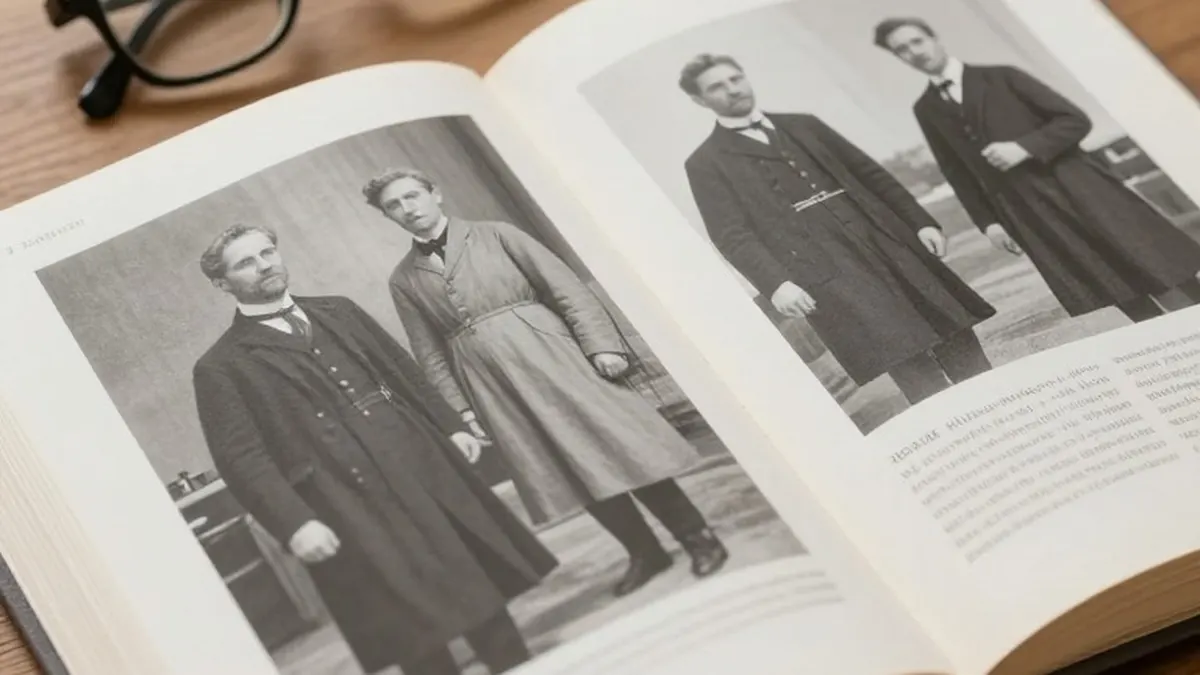
Fifty years after its publication, Irving Howe’s seminal work “World of Our Fathers” is experiencing a significant resurgence in relevance. The 700-page history, co-written with Kenneth Libo and published in 1976, was once a standard fixture in American Jewish households. It chronicled the lives of Eastern European Jews who immigrated to the United States at the turn of the 20th century, depicting a world of garment workers, Yiddish intellectuals, and communal networks. While its presence on bookshelves signaled a connection to heritage for many, the book is now being embraced for its political arguments as much as its historical value.
The timing of the anniversary coincides with a moment of political momentum for the Democratic Socialists of America, a party co-founded by Howe. Recent electoral victories, including six DSA-backed candidates winning seats in Congress and DSA members becoming mayors in major cities such as Los Angeles and New York, have drawn attention back to the socialist roots of the Jewish immigrant experience. For younger Jews aligned with progressive politics, Howe’s text serves as less of a nostalgic artifact and more of an inheritance they are eager to reclaim. Sam Adler-Bell, a contributing writer at New York Magazine and member of the Dissent editorial board, noted that he looked to the book to find his identity as both a socialist and a Jew.
This renewed interest was highlighted at a panel discussion held at the Center for Jewish History in Manhattan. The event, organized by the YIVO Institute for Jewish Research and the Tenement Museum, featured scholars and writers reflecting on the book’s legacy. Hasia Diner, a professor emerita of history at New York University, praised the book’s literary expressiveness while noting its tendency to generalize and its limited focus on women. She described the work as a counter-narrative to the sentimental portrayal of Yiddish culture found in popular media, arguing that Howe depicted a complex society that was already in disarray before arriving in America.
Tony Michels, a professor of American Jewish history at the University of Wisconsin-Madison, emphasized the book’s intended message to the political left. He argued that Howe was advocating for menschlichkeit, or human decency, in political life. Michels suggested that Howe’s work served as a warning against abandoning compassion for the sake of ideological purity. This theme resonates with current readers who are grappling with the practical and ethical dimensions of modern socialist politics. The panelists agreed that the book remains a vital text for understanding the intersection of labor, culture, and identity.
However, the book’s legacy is not without debate. Critics have long pointed out that Howe emphasized the radical and secular tendencies of immigrants, sometimes at the expense of acknowledging religious life and entrepreneurial success. Conservative writer Midge Decter argued that Howe’s portrayal created a distorted view of a community that included synagogues, rabbis, and Republicans. Despite these critiques, defenders like Michels argue that Howe was highlighting how the labor movement helped mobilize the broader community around practical concerns such as housing and food security. The desire to improve working conditions and the aspiration for economic advancement were often intertwined for these newcomers.
A significant point of tension for modern readers is the relationship between Howe’s views on Zionism and those of today’s DSA. While Howe supported Jewish national self-determination, the contemporary DSA is often characterized by its anti-Zionist stance. Michels noted that this represents a fundamental difference that might have caused Howe to feel conflicted about the organization’s current direction. Nevertheless, Adler-Bell believes Howe would appreciate the pragmatic approach of modern DSA candidates, even if he would disagree with their stance on Zionism.
The book’s final epilogue captures the bittersweet nature of the immigrant experience. Howe lamented that despite economic success, the cultural bonds that held the community together largely disappeared within a century. This ambivalence between achievement and loss remains central to the book’s impact. As new generations pull the volume from their parents’ shelves, they are engaging with a text that continues to offer a lens for understanding their own history and a framework for navigating current political uncertainties. The work stands as a testament to the enduring power of memory in shaping identity.
In her closing remarks, Annie Polland, president of the Tenement Museum, reflected on the importance of historical memory. She cited the historian Marcus Lee Hansen’s observation that what a son wishes to forget, a grandson often wishes to remember. Polland suggested that Howe was fortunate in that he chose to remember, research, and articulate a world that could be passed down to future audiences. This act of preservation ensures that the experiences of the early 20th-century immigrants continue to inform and inspire those who came after them.
The 50th anniversary of “World of Our Fathers” marks a moment of reflection on how history is interpreted and utilized in the present. As the political landscape shifts, the book provides a bridge between the past and the future, connecting the struggles of the past with the aspirations of the present. It remains a compelling read for those interested in the complex tapestry of Jewish American history and the ongoing dialogue about socialism, identity, and community in the United States.