Cambridge Dictionary selects 'human' as word of the year amid AI surge
The selection reflects a growing cultural emphasis on distinguishing human traits from artificial intelligence in 2026.
By Vanessa Lopez ·
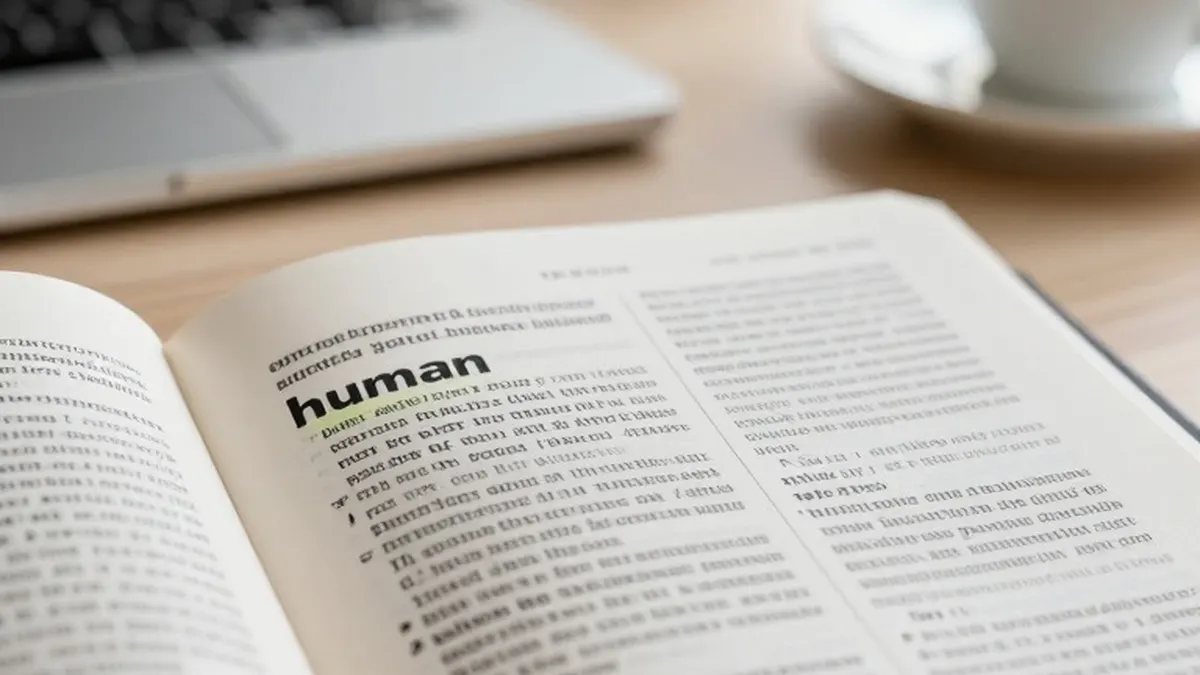
The Cambridge Dictionary has officially named 'human' as its word of the year for 2026. The announcement, made in the United Kingdom on Wednesday, underscores the ongoing public discourse regarding how artificial intelligence is reshaping the distinction between machines and people.
The dictionary explained that the term 'human' has historically distinguished people from animals and deities. However, in recent times, it has evolved to specifically contrast humans with machines. The publication noted that the word is increasingly appearing in compound terms such as 'human-written,' 'human-generated,' and 'human-made.' These phrases now serve to identify content or objects created by people rather than by artificial intelligence.
Colin McIntosh, a lexicographer for the dictionary, observed that while AI has been a part of society for several years, its presence felt pervasive in 2026. This saturation appeared to alter how individuals discuss their own humanity and the value they place on human elements in daily life.
In a statement, McIntosh described the year as one marked by a renewed appreciation for the human factor in the content people consume. He noted that this shift has led to what he called a 'human premium.' This new valuation extends to the human element in life in general, a trend that was confirmed through the dictionary's analysis of language data, internet trends, and search habits.
Based on these findings, the team concluded that 'human' was the most appropriate choice to reflect the current linguistic landscape. The selection highlights a broader societal effort to define and celebrate what remains distinctly human in an era of rapid technological advancement.
This is the second consecutive year that the dictionary's top pick has been linked to the rise of AI. In the previous year, the organization selected 'parasocial' as the word of the year. At that time, the choice reflected how social media was intensifying the intimacy fans feel toward celebrities. It also accounted for the growing popularity of AI companions that can adopt specific personalities, giving a new relevance to the term for one-way relationships.
The shortlist for the 2026 award included four other contenders that reflected various cultural and technological shifts. These words were 'analogue,' 'agent,' 'wholesome,' and 'chic.' Each of these terms represented different facets of the evolving social and digital environment.
The decision to highlight 'human' serves as a linguistic marker for the current moment. It suggests that as technology becomes more indistinguishable from organic life in many contexts, language is adapting to preserve the unique identity of human creation and interaction.
The Cambridge Dictionary's annual word of the year selection is a widely watched event that often captures the zeitgeist of the year. By choosing 'human,' the publication places the focus back on the people using the language, rather than the systems generating it.
The announcement was reported with files from CBC News, which covered the dictionary's release and the broader implications for how society perceives the role of AI in everyday communication.