Second deadly train collision in nine months raises safety questions for Spain's high-speed network
At least 64 people died when two trains collided near Toledo on Wednesday, months after a January crash in Andalucía killed 46.
By Amir Navarro ·
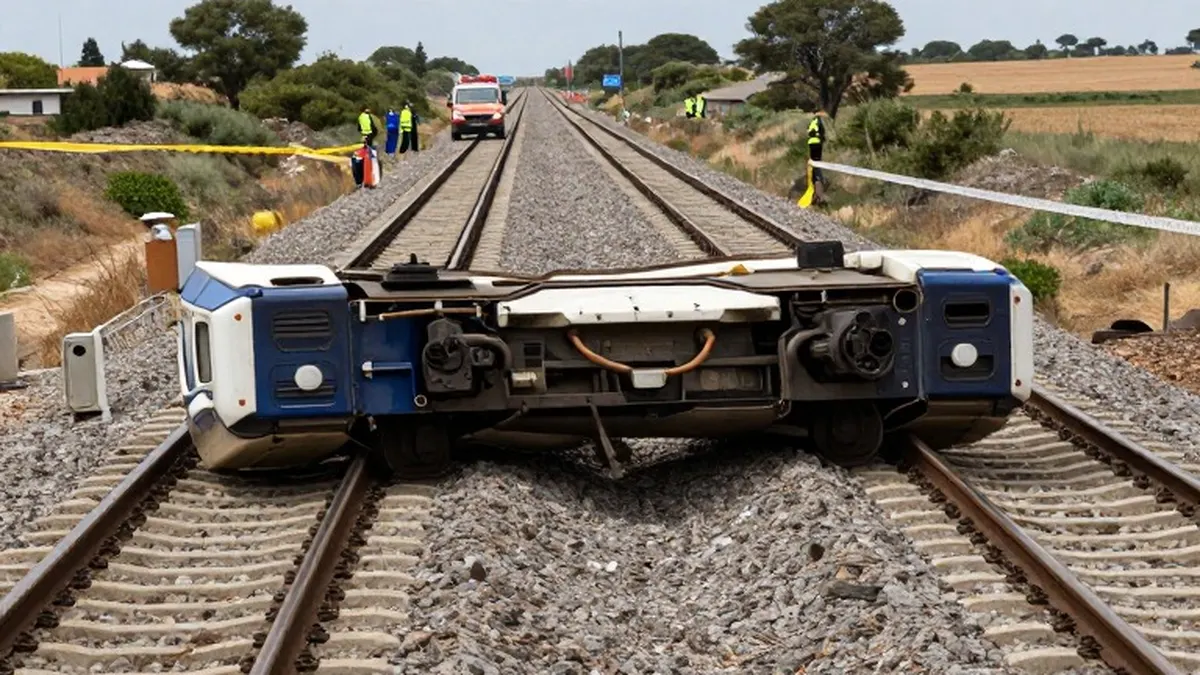
A collision between two trains on Wednesday morning killed at least 64 people in Spain, turning attention to the safety of a high-speed rail network that the country has long held up as a source of national pride. It is the second fatal crash in nine months.
Officials said the impact caused several carriages to derail. The two trains were carrying a combined 544 passengers.
The cause has not been confirmed. A source told Reuters that a train run by the private operator Iryo had stopped near the city of Toledo because of a signalling fault, on orders from infrastructure manager Adif. Shortly afterwards, a second train, operated by state-owned Renfe and travelling at high speed on the same line, struck the stationary train.
Renfe said in a statement that its train had been told to continue on its way and hit the Iryo train "for reasons we don't know".
The crash follows one in January near the town of Adamuz in Andalucía, which killed 46 people and injured dozens more. Media were quick to note the parallels: both accidents involved the same operators and happened on the line linking Madrid with Andalusia, the oldest on Spain's high-speed network. Rail unions say the debate over safety on that line, which began after the first crash, has continued.
Wednesday's disaster came a day before a planned 24-hour stoppage at Renfe by Spain's largest train drivers union. "Our goal is to change the system and make it safer," the union said earlier this month. Its demands included climate emergency protocols, channels for workers to raise concerns, and guarantees that trains would be "reliable and safe". It also called for "real and definitive technical solutions to the safety and reliability issues that have long plagued our rolling stock". A separate rolling six-day strike has been called for drivers at the high-speed operator Ouigo.
The January crash prompted political finger-pointing over whether Prime Minister Pedro Sánchez's Socialist government had spent enough on maintenance. Trains account for about 57% of all transport in Spain, and rail travel grew by 40% between 2019 and 2024, a period in which the network opened to private companies. In the first half of this year, 25 million passengers used a high-speed train. The government says it has raised maintenance spending by 54% since taking power in 2018.
Spain spends more than any other country on its high-speed network, averaging about €1.5bn (£1.26bn) a year from 2018 to 2022, according to a Reuters analysis of EU data. More than 90% of the network has the highest level of safety control systems in the EU. However, much of the money appears to have gone to new infrastructure, with about 16% set aside for maintenance, renewal and upgrades. European Commission data suggests maintenance investment on Spain's 4,000km (2,500 miles) of high-speed lines has trailed countries such as Germany and Switzerland, though differences in the age of the lines and the cost of public works and materials may explain some of the gap.
Until this year, Spain had among the lowest accident rates in the EU, with one or fewer fatalities per thousand kilometres of track, according to Eurostat. The country's worst rail accident remains the 2013 derailment outside Santiago de Compostela, when 80 people died after a train left a curved section of track.
Source: The Guardian