UN Security Council Vote Tests Grynspan's Path to Top Global Post
A decisive secret ballot on Friday will determine if Rebeca Grynspan can overcome resistance from major powers and secure a recommendation to the General Assembly.
By Vanessa Lopez ·
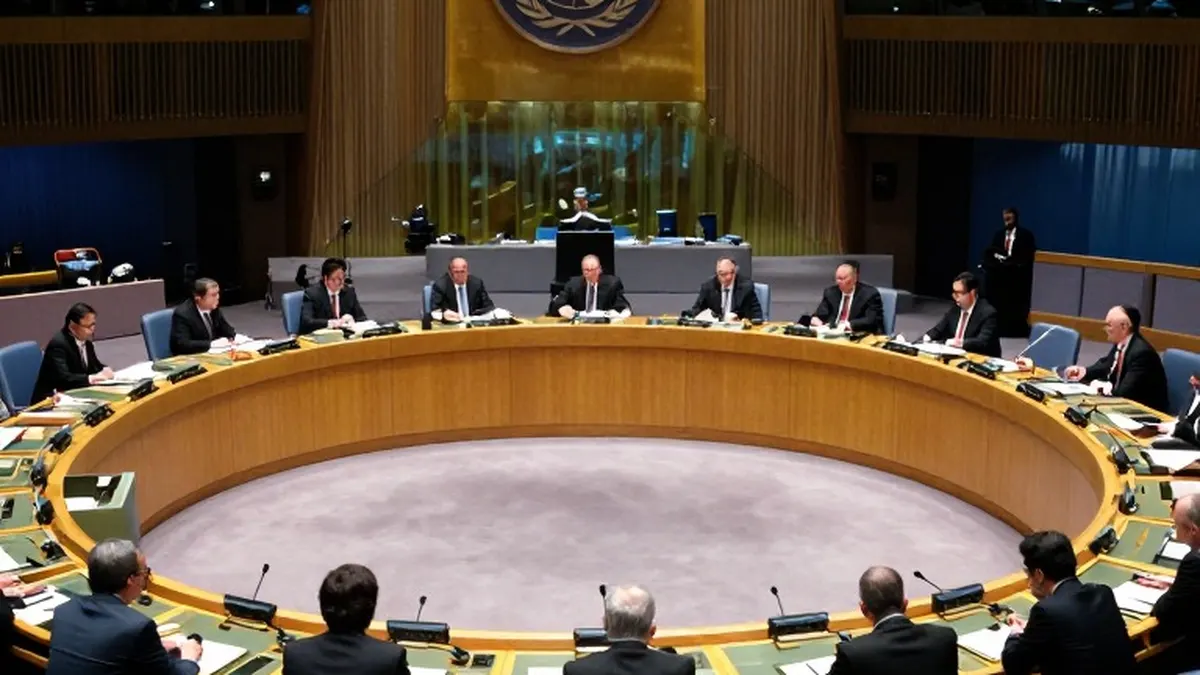
The selection process for the next United Nations secretary general is approaching a critical juncture this Friday. A scheduled security council vote is expected to clarify whether the leading candidate will face a block from the world's most influential nations. Such a setback would intensify existing debates regarding the disproportionate power held by the five permanent members of the council.
Rebeca Grynspan, an economist and veteran UN official, has maintained a strong lead in recent informal polls. She is the daughter of Polish-Jewish refugees who settled in Costa Rica. Since the initial secret ballot in July, she has topped the list in all but one of the eight straw polls conducted by the 15 council members. In these votes, members indicate whether they encourage, discourage, or have no opinion on each candidate.
While voting records are not officially public, diplomatic circles believe that the United States and Russia have resisted Grynspan's candidacy. Both nations hold veto power, a crucial tool in the final selection process. Information about voting trends is often gathered through private intelligence, leaks, and careful observation of diplomatic patterns.
Friday's ballot is particularly significant because it uses a color-coded system to separate the votes of the five permanent members, who use red ballots, from the ten elected members, who use white ones. To be recommended to the General Assembly, a candidate requires nine affirmative votes and no vetoes. One diplomat noted that the system makes it vital not only to gain votes but also to avoid losing support from specific key members.
The prolonged deadlock, which has lasted 140 days, highlights the deep polarization that has also affected the tenure of current Secretary General António Guterres. This stalemate challenges the notion that the role has become obsolete. The upcoming vote may also expose vulnerabilities in the campaign of Lana Nusseibeh, a diplomat representing the United Arab Emirates.
Nusseibeh has faced significant resistance due to perceptions of the UAE's commercially driven diplomacy, which has drawn criticism in regions including Sudan, Somalia, and Yemen. In the two straw polls she has participated in, she received only seven votes of encouragement, six of discouragement, and two abstentions. Despite having the backing of the US and Russia, her candidacy faces hurdles.
In the United Kingdom, the position is complex. Foreign Secretary Ed Miliband has remained quiet but shares a similar refugee heritage with Grynspan and may view the UAE's human rights record with skepticism. Prime Minister Andy Burnham has ties to the UAE from his time as Manchester mayor, and Nusseibeh is a Cambridge alumnus. However, 68 British MPs recently signed a letter urging Burnham to veto Nusseibeh, describing her as a compromised figure.
Latin American nations, including Panama and Colombia, support an informal rotation principle that they believe gives their region the right to the post. This stance is shared by China. Other countries object to what they see as the UAE's use of wealth to exploit pre-existing divisions for commercial gain. Somalia, a current council member, has publicly accused the UAE of establishing military bases and buying ports without federal approval.
Finland and Latvia, with significant interests in Ukraine, may be critical of the UAE's warm welcome to Vladimir Putin in late 2023. Meanwhile, Grynspan faces her own challenges. In the US, she has struggled to gain influence, with many pointing to Ambassador Mike Waltz as a key figure. Her age, 70, is also a point of discussion for those seeking younger leadership.
In the most recent color-coded ballot in October, Grynspan received two discouragement votes from permanent members, effectively equivalent to vetoes. Nusseibeh was not yet in the race at that time. Now, the council must break the logjam, with both candidates facing distinct political and diplomatic obstacles in the final stages of the process.