Netanyahu's Office Does Not Deny Trump's Announcement of Imminent Halt to US Military Aid
Responding for the first time to the US president's surprise pledge to end $4 billion in annual military assistance by year's end, the Prime Minister's Office framed the move as a transition from aid to partnership rather than disputing it.
By Amir Navarro ·
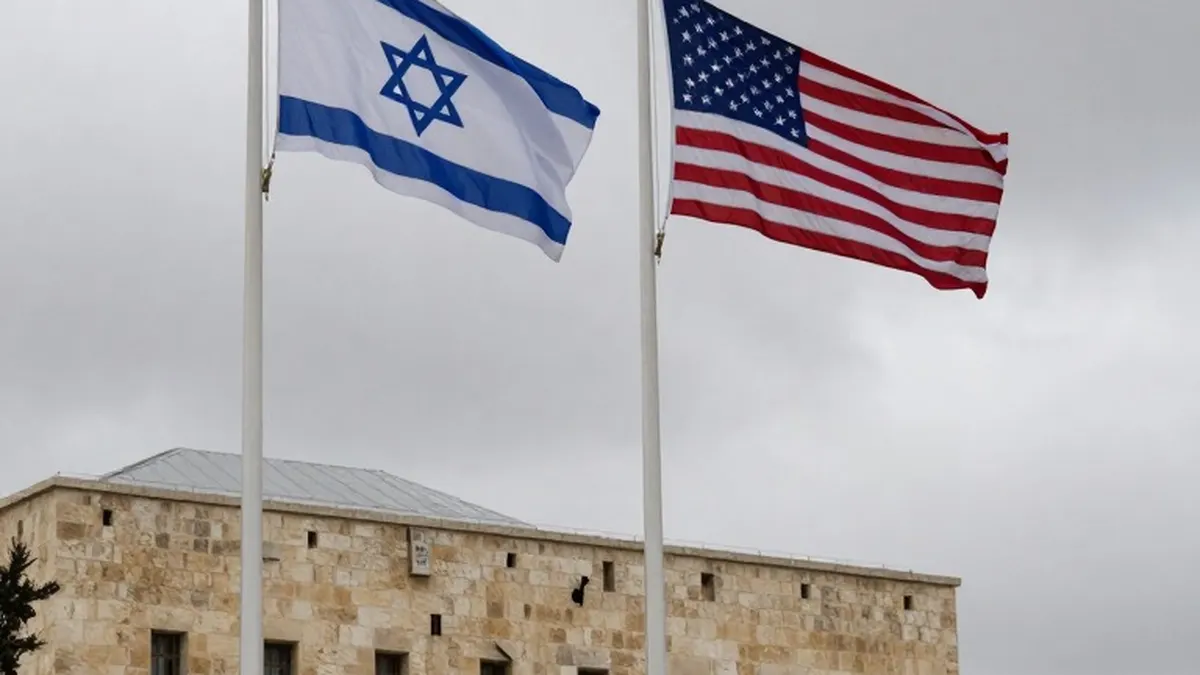
Prime Minister Benjamin Netanyahu's office on Friday issued its first response to US President Donald Trump's surprise announcement this week that American military aid to Israel will be completely halted at the end of this year, and it did not offer a denial.
Speaking Tuesday morning, as Americans voted in the midterm elections, Trump said the United States would cease providing $4 billion in annual military aid to Israel by the end of 2026. The comments reportedly caught Israeli security and financial officials off guard: the current memorandum of understanding on military assistance, which provides $3.8 billion a year, does not expire until the end of September 2028. Netanyahu has previously spoken publicly about ending US military assistance, but gradually over the next decade, not all at once.
In a Friday statement on X, the Prime Minister's Office signaled that the structure of US-Israel ties would shift. "US military aid to Israel has always been a cross-the-aisle agreement. Israel has used it both to defend itself and to confront enemies who threaten America and the West," the statement said. "Today, Israel has a strong and stable economy. The move by PM Netanyahu and President Trump from aid to partnership shows the strength and sophistication of our relationship, and its ability to adapt and stand strong over time."
The post was accompanied by a clip of a Fox News interview with PMO spokesman Doron Spielman, who said, "While this aid has been incredibly important, the prime minister has been working with President Trump to make the correct transition out from aid towards partnership and mutual investment." The statement's nod to bipartisan support appeared to allude to the Democrats' victory in the midterms. Democrats in particular have increasingly turned against aid to Israel in recent years, though Trump has also questioned it.
The tone contrasted with President Isaac Herzog, who expressed concern on Thursday, saying the revelation "hit me like a bolt out of the blue," and noting that the current agreement runs through 2028. US Ambassador to Israel Mike Huckabee told Channel 12 news the same day that he was unsure whether military aid would end immediately or at the end of 2028.
Israel has received more than $300 billion, adjusted for inflation, in US economic and military assistance since its establishment in 1948, more than any other country since 1946, according to the Council on Foreign Relations. Washington committed to providing billions in military assistance to Israel and Egypt each year under their 1979 US-brokered peace treaty. Aid once made up a significant share of Israel's military spending, but that share has shrunk as Israel's economy has flourished.
In March the Knesset approved a budget allotting the Defense Ministry a record NIS 143 billion ($45 billion), and in July the Finance Ministry agreed to immediately transfer an additional NIS 15 billion ($5 billion), though defense officials say a NIS 40 billion ($12 billion) deficit remains. Part of the push to end aid stems from frustration during the Gaza war, when several allies halted arms supplies and the Biden administration held up some munitions over concerns they could cause undue harm to Palestinian civilians.
Israel, and the war it launched with the United States against Iran in February, were at the center of political discourse ahead of the vote. Democrats took control of the US House and Senate by considerable margins on Tuesday in a clear show of dissatisfaction with Trump, the war and the higher prices it has caused, while support for Israel among Democratic voters has plummeted and several anti-Israel candidates won races.
The New York Times reported Thursday that six days before the vote, Trump's top pollster, Tony Fabrizio, joked to colleagues on a private video call that "maybe we could get asylum in Israel" if things went badly for the Republican Party. Another aide, strategist James Blair, was said to have sarcastically remarked, "At least Bibi won. He'll protect us."
Netanyahu's Likud did emerge as the largest party in last week's Knesset election, but he lost his governing majority, and Yashar party chair Gadi Eisenkot has received the backing of a 67-seat majority to be the next prime minister, though his path to forming a government is unclear. Trump, who endorsed Netanyahu nine days before the October 27 vote, declared as results came in that his support had helped deliver "a big come-from-behind stalemate, or even a WIN."