Kallas Positions Herself as Key European Negotiator in Ukraine War Talks
EU High Representative Kaja Kallas suggests she could represent Europe in peace negotiations, citing treaty provisions and arguing that Russia should accept Europe's chosen representatives.
By Vanessa Lopez ·
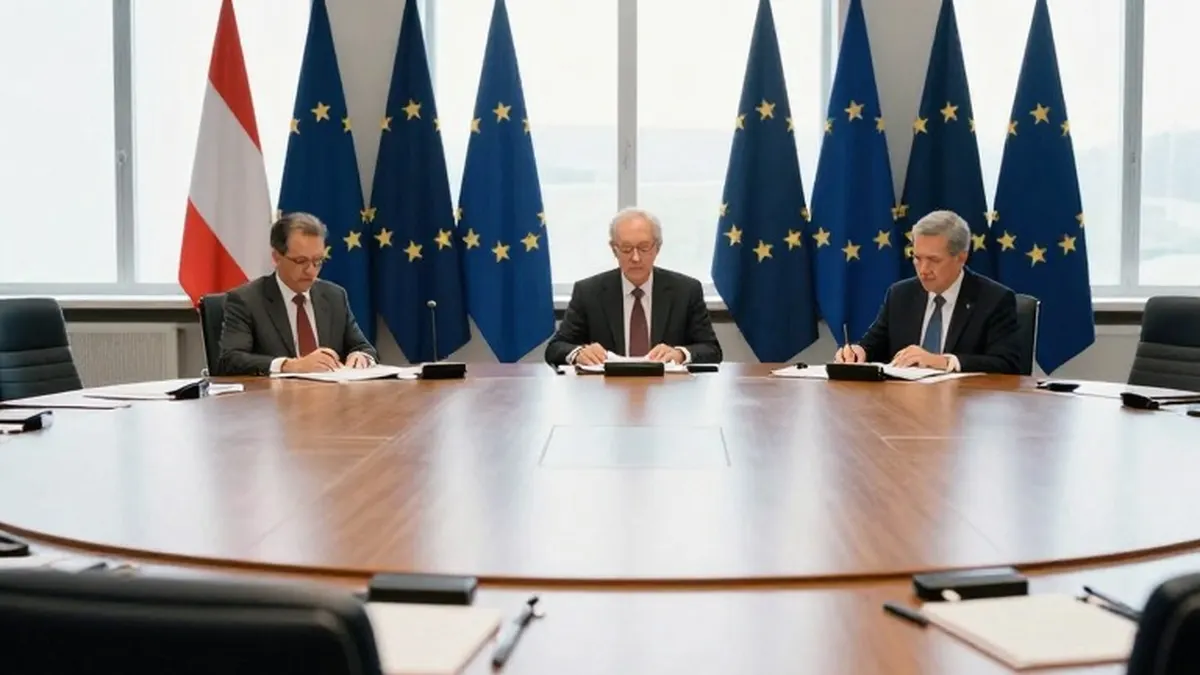
Kaja Kallas, who serves as the European Union’s High Representative for Foreign Affairs and Security Policy and as a Vice President of the European Commission, has indicated that she is prepared to represent Europe in negotiations aimed at ending Russia’s war against Ukraine. Speaking at the European Political Community summit, Kallas outlined her view that the current institutional framework supports her role in such diplomatic efforts.
The EU official pointed to discussions held by EU leaders in 2024, a period when the current top officials were appointed. She emphasized that the treaties governing European security are specific regarding representation. Kallas stated that it is Council President Antonio Costa and the High Representative, a role she occupies, who are designated to represent Europe in security matters.
Despite her confidence in the existing treaty provisions, Kallas acknowledged that EU leaders retain the authority to make a different choice. She noted that they could reopen discussions regarding potential candidates for the negotiating team. She described such negotiations as inherently difficult processes that require careful management among member states.
When asked about the possibility of Russia opposing her candidacy, Kallas, who is widely known for her firm stance against Moscow, suggested that such objections should not dictate Europe's decisions. She argued that Europe should not be overly concerned with what Russia says about its representatives, drawing a parallel to how Russia has not commented on Europe's choices in a reciprocal manner.
Kallas questioned why the opinions of Russian officials should hold weight in the selection process for European delegates. She asserted that every party involved in the conflict should have the freedom to choose their own representatives without external interference. This perspective reflects a broader strategy to maintain European autonomy in the diplomatic process.
In a separate part of her remarks, Kallas highlighted that a comprehensive European security architecture already exists. She noted that this framework is enshrined in several major international agreements, including the Helsinki Final Act, the Paris Agreement, and the Budapest Memorandum. Russia, she reminded the audience, has previously agreed to this security structure.
However, Kallas stressed that the primary issue is not the absence of an architecture, but rather Russia’s failure to comply with the agreements it has signed. She argued that the current focus should be on ensuring that Russia fulfills its existing obligations. This approach suggests that the upcoming negotiations might prioritize enforcement of prior commitments over the creation of new frameworks.
The discussion on European representation in potential peace talks has revealed varying views among member states. Estonia believes that both Council President Antonio Costa and Foreign Policy Chief Kaja Kallas are well suited to represent Europe. This view aligns with Kallas’s own assessment of her potential role in the negotiations.
Not all European leaders share the same perspective on the necessity of a single representative. Irish Prime Minister Micheál Martin has expressed the view that Europe does not necessarily require one unified spokesperson in talks with Russia. He suggests a more flexible approach might be beneficial for the negotiation dynamics.
German Chancellor Friedrich Merz has shifted the focus away from the identity of the representative. He stated that the critical question is whether Russia will agree to have Europeans at the negotiating table at all. This debate underscores the ongoing strategic discussions within the EU as they prepare for potential diplomatic engagement with Moscow.