Iran advances new missile variants amid US naval blockade
Despite US naval pressure and recent strikes, Iran is developing hybrid ballistic missiles to improve accuracy and evade air defenses.
By Vanessa Lopez ·
A recent assessment by the Institute for the Study War and the Critical Threats Project suggests that Iran is actively developing new ballistic missile variants while evaluating strategies to counter a US naval blockade. The report, dated November 24, indicates that Tehran continues to enhance its missile arsenal despite significant damage to its military infrastructure and defense industry caused by US and Israeli strikes earlier in the year.
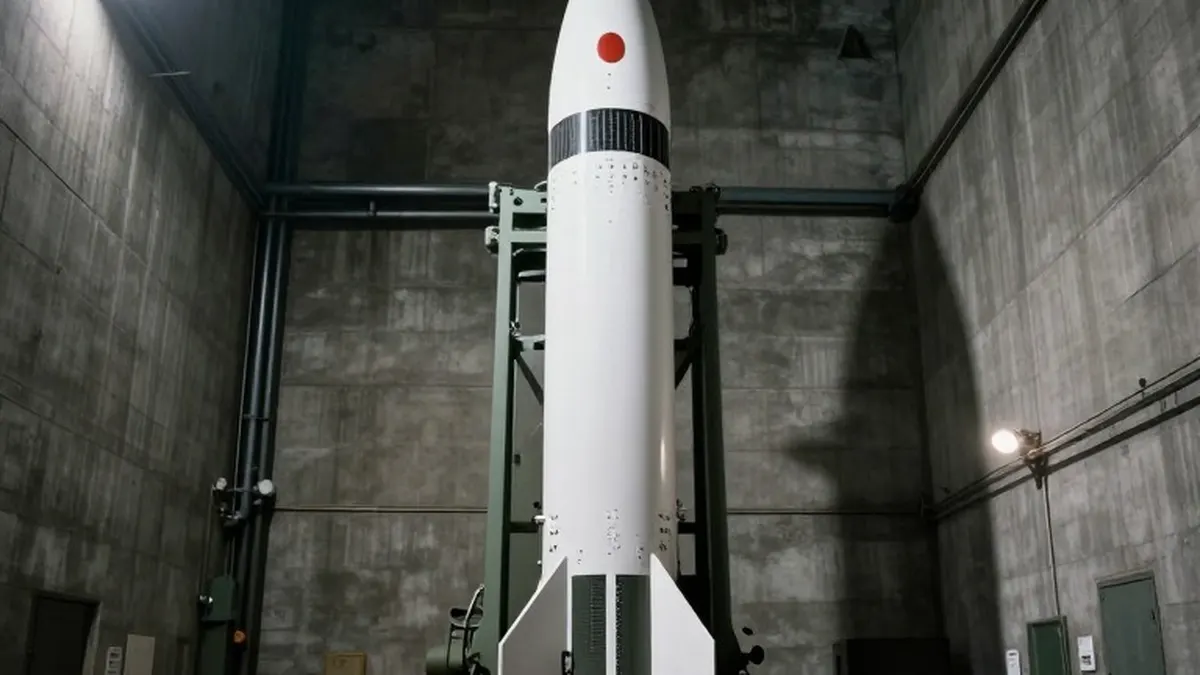
In recent weeks, Iranian media have displayed footage of several underground facilities housing ballistic missiles. On November 21, broadcasts showed an underground site containing a launcher capable of firing two missiles simultaneously. This location is one of Iran's many so-called missile cities. While it remains unclear if the footage was newly recorded, the release was interpreted as a deliberate message to the United States and regional actors.
According to the assessment, the Islamic Revolutionary Guard Corps is reportedly creating new versions of existing medium-range ballistic missiles. The goal of these developments is to improve accuracy and defeat air defense systems. The report states that Iran is pairing more powerful propulsion systems with warheads designed to maneuver just before impact. This combination aims to reduce the risk of interception and allow strikes on targets with greater precision.
The analysis notes that the IRGC has developed hybrid missile variants. These weapons combine the propulsion system of the Haj Qassem medium-range ballistic missile with the maneuverable reentry vehicles of the Kheibar Shekan, Kheibar Shekan-2, and Fattah-1 warheads. All of these solid-fueled missiles have been used in recent attacks. The Haj Qassem propulsion system allows the missile to reach a higher terminal velocity, leaving air defense systems with less time to react and increasing the force of impact.
Meanwhile, the maneuverable reentry vehicle systems on the Kheibar and Fattah warheads alter the flight path during the final phase of the missile's trajectory. This capability helps the weapon evade defenses and improve targeting accuracy. Iran may also equip various missiles with cluster munitions, a tactic previously used in attacks against Israel and US forces in the region.
The economic impact of the US naval blockade is becoming a major concern for senior Iranian officials. Maj. Gen. Mohsen Rezaei, Secretary of the Supreme National Security Council, stated on X on November 24 that Iran and its armed forces remain determined to break the blockade. Mahdi Mohammadi, an adviser to Parliament Speaker Mohammad Bagher Ghalibaf, claimed in an interview with state television that there is a consensus among decision-makers that the blockade constitutes an act of war.
The report assesses that the economic costs of the blockade are increasingly difficult for Tehran to sustain. This pressure is prompting discussions about coercive measures against the United States. Despite these challenges and previous strikes, Iran continues to produce missiles. In March, Prime Minister Benjamin Netanyahu stated that Iran had lost the ability to enrich uranium and produce ballistic missiles after 20 days of conflict.
Past assessments of damage to Iran have sometimes been overly optimistic. Reports from the June 2025 conflict and more recent strikes indicated that many launchers were destroyed. However, it later emerged that some assessments counted launchers that had been sealed inside tunnels by strikes, which Iran subsequently dug out. In October 2024, Israel struck Iranian planetary mixers, an action intended to set back the solid fuel missile program. Iran has repeatedly demonstrated its ability to revive such programs.
The ISW report highlights that Iran can likely produce these new hybrid variants with minimal adjustments to its production and supply chain. This efficiency is possible because the Haj Qassem, Kheibar Shekan-2, and Fattah-1 missiles all belong to the Fateh-110 family and share similar technology and supply chains. The extent of Iran's remaining missile production capabilities and stockpiles remains unclear following the strikes in the spring of 2026.