India and the UK Prioritize Partnership Over Colonial History
Prince William and Catherine’s visit to India highlights a strengthening partnership between New Delhi and London, driven by economic and strategic interests that have superseded historical tensions.
By Amir Navarro ·
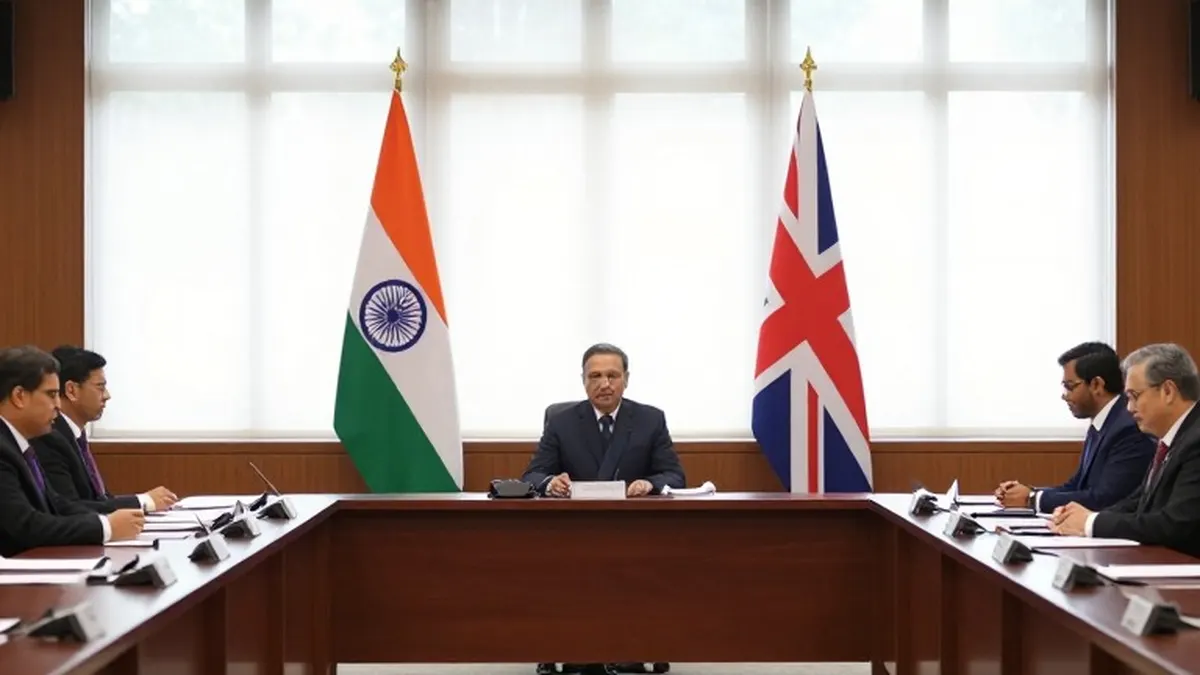
Indian Prime Minister Narendra Modi is set to welcome Prince William and Catherine, the Princess of Wales, in New Delhi on Wednesday. This high-profile visit marks the first time the British royals have traveled to India in a decade. The three-day trip began in Mumbai, where the couple played street cricket with cricket legend Sachin Tendulkar before heading to the capital.
The royal couple will attend the Earthshot Prize ceremony in Delhi, an environmental award established by Prince William. Their presence underscores a bilateral relationship that has deepened significantly, despite Modi’s recent rhetoric regarding the need to decolonize the Indian mind. In November 2025, the prime minister outlined a ten-year plan to address the lingering psychological effects of two centuries of British rule.
While Modi has renamed colonial landmarks and replaced British-era legal codes, the practical ties between the two nations have grown stronger. Economic interests have become the primary driver of this partnership, particularly for the United Kingdom, which has sought new trading partners following its exit from the European Union.
A landmark free trade agreement signed by Modi and former British Prime Minister Keir Starmer in July 2025 came into force last year. British government estimates suggest the deal could boost annual bilateral trade by 25.5 billion pounds in the long term. Trade volumes between the two countries already reached nearly 48 billion pounds in 2025, highlighting the substantial economic stakes involved.
Strategic cooperation has also expanded beyond commerce. In October 2025, the two nations signed a 465 million dollar contract for UK-manufactured lightweight missiles for the Indian military. Additionally, they agreed to establish centers for innovation, connectivity, and artificial intelligence, along with a critical minerals group to strengthen supply chains and advance green technology.
Experts note that these shared interests allow both countries to manage their differences effectively. Kate Sullivan de Estrada, an associate professor at the University of Oxford, observed that India has become a priority in UK foreign policy as London seeks partners to address global challenges such as climate change and health. This convergence of post-Brexit ambitions with Indian strategic goals has fostered a robust partnership.
However, the relationship is not without friction. Tensions often arise from diaspora politics, particularly regarding the Khalistan movement, which seeks an independent Sikh homeland in India’s Punjab region. New Delhi has repeatedly criticized British authorities for not adequately addressing activities of groups it views as extremist, a point of contention that flared again in March 2025 when a protester tore an Indian flag during a visit by Indian Foreign Minister Subrahmanyam Jaishankar.
Other sources of disagreement include India’s human rights record, policies in Kashmir, and issues related to immigration and extradition. Jaideep Prabhu, a professor at Cambridge University, noted that these domestic political concerns sometimes intersect with the bilateral relationship, creating minor but persistent points of tension.
Despite these challenges, analysts believe the relationship is sufficiently broad to absorb friction in specific areas. The large Indian diaspora in the UK, estimated at two million people, serves as a cultural bridge, while institutional similarities in legal and parliamentary systems maintain a sense of familiarity between the two societies.
The current royal visit symbolizes this evolving dynamic. By focusing on sustainability and innovation, the trip highlights a partnership that acknowledges its complex history while looking toward a shared future. As Prabhu noted, the emphasis on building together reflects a mature relationship capable of managing its past while pursuing mutual growth.