European Youth Lead Coordinated Protests Against Cost of Living and Military Spending
Coordinated youth protests are set to sweep across more than 25 European countries this weekend, targeting housing costs, military spending, and educational conditions.
By Amir Navarro ·
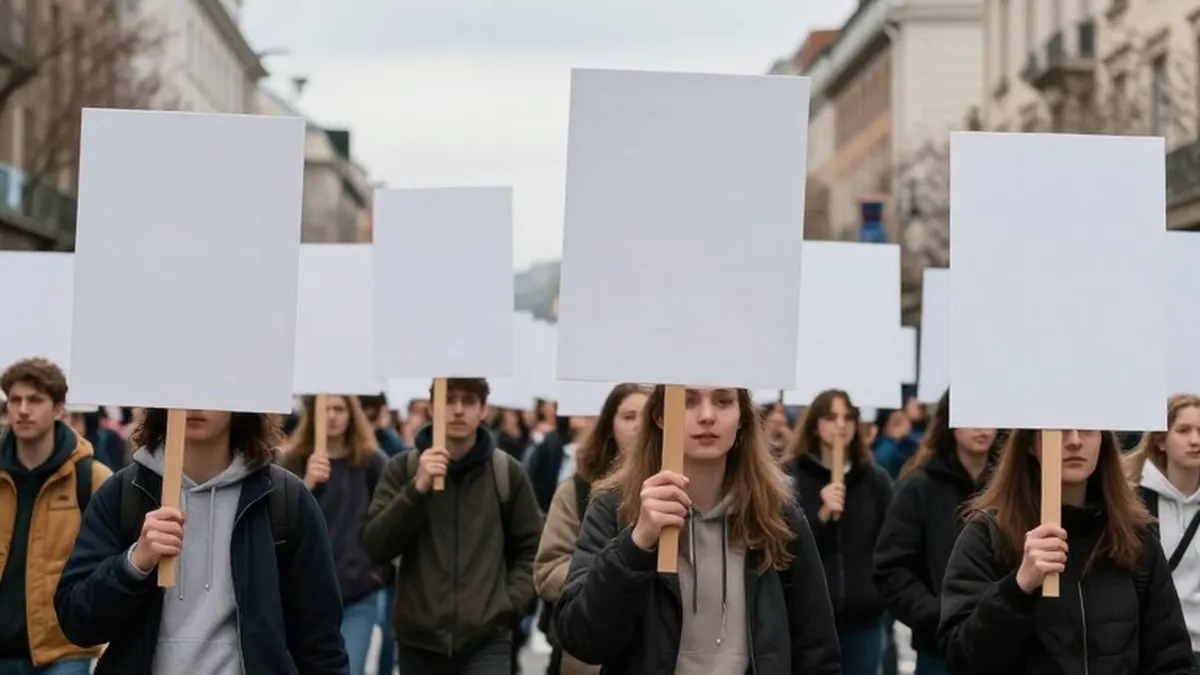
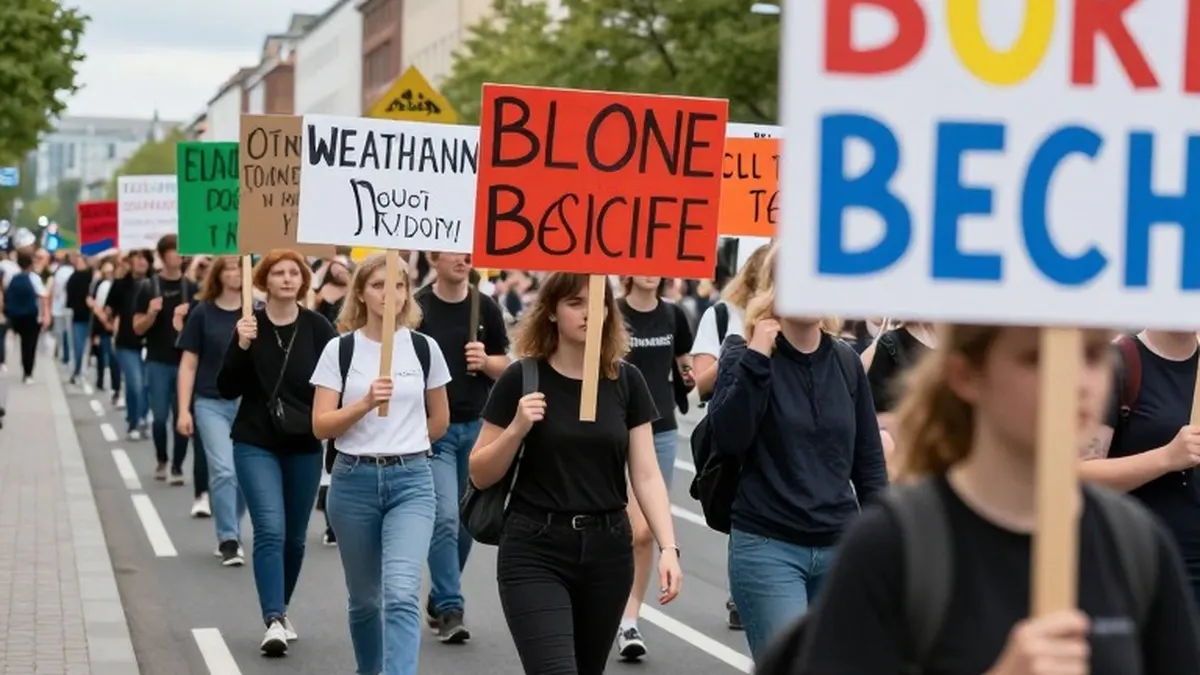
Youth-led demonstrations are scheduled to take place in more than 25 European countries on Friday and over the coming weekend. Coalition organizers announced the coordinated actions as an effort to build cross-border solidarity and intensify pressure on national governments. The rallies address a range of urgent issues, including the escalating cost of housing, deteriorating educational conditions, stagnant wages, and increased military expenditures.
This wave of activism follows weeks of unrest in several European nations. Unions and activists from France, Britain, Belgium, Spain, Italy, Portugal, and Greece are joining forces to raise the stakes with simultaneous rallies. While local grievances have initially driven participation, the movements are unified by continent-wide concerns. The timing of these events coincides with the fifth anniversary of Russia's invasion of Ukraine and precedes major elections in Spain, France, Italy, and Greece.
Zennor Tyndale-Biscoe, a 17-year-old student planning to demonstrate in Truro in southwest England, described the event as a vital platform for the youth voice. He expressed the need for immediate systemic change to secure the future. The coalition, comprising over 50 youth and student-led groups, has called for a radical transformation of the current system. They have encouraged young people to protest against militarisation and social injustice, using the slogan, "Fight for our future, not their wars!"
The movement includes prominent figures from previous protests, such as France's Yellow Vests, who shook the presidency of Emmanuel Macron in 2018 and 2019. Organizers have outlined six broad demands, ranging from establishing a guaranteed right to housing for all to implementing higher taxes on the wealthy and ending rearmament policies. Critics argue that while the European Union allocates significant funds to rearmament in response to the Russian threat, those resources should instead be directed toward education, youth policies, and housing.
In Germany, fears regarding the potential reintroduction of military service have motivated many young people to join the protests. Hannes Kramer, a German student, noted that while seemingly unlimited money is being poured into the military and its infrastructure, the welfare state is being dismantled. The collective "GenZ regelt" expects 15,000 people to gather in Berlin, with additional actions planned in dozens of other cities across the country.
In France, the demonstrations align with the eighth anniversary of the Yellow Vest movement, which began as a campaign against fuel taxes before expanding into a broader cost-of-living protest. In Italy, the events coincide with a general strike affecting transport, schools, and hospitals. The CGIL trade union has labeled the protests "the country's call for change."
Spain marks the anniversary of the death of dictator Francisco Franco, with youth demonstrations scheduled for midday and anti-fascist rallies planned for the evening. Across Portugal, Croatia, and Switzerland, hundreds of protests and strikes are anticipated, though the exact scale of mobilisation remains difficult to predict at this stage.
The current European protests were inspired by French students who began blocking high schools in mid-September to demand better learning conditions. This school movement evolved into a nationwide campaign against soaring prices, inadequate public services, and police brutality. Several young people have suffered injuries, including loss of eyesight or hands, from police weapons, while thousands have reported the severe effects of tear gas.
The French strategy of blocking schools, known as "blocus," has inspired similar student actions in Belgium, Italy, and Spain, where the French term has become a popular hashtag. French historian Sylvain Boulouque observed that youth movements are emerging simultaneously around the world. He noted that a common thread uniting almost all these demonstrations is a deep distrust of law enforcement and political authorities.