Trump states Iran war funding extends to January amid shifting congressional control
The US President indicated that financial resources for the conflict with Iran will remain available until the end of January, a period that coincides with the upcoming change in congressional leadership.
By Amir Navarro ·
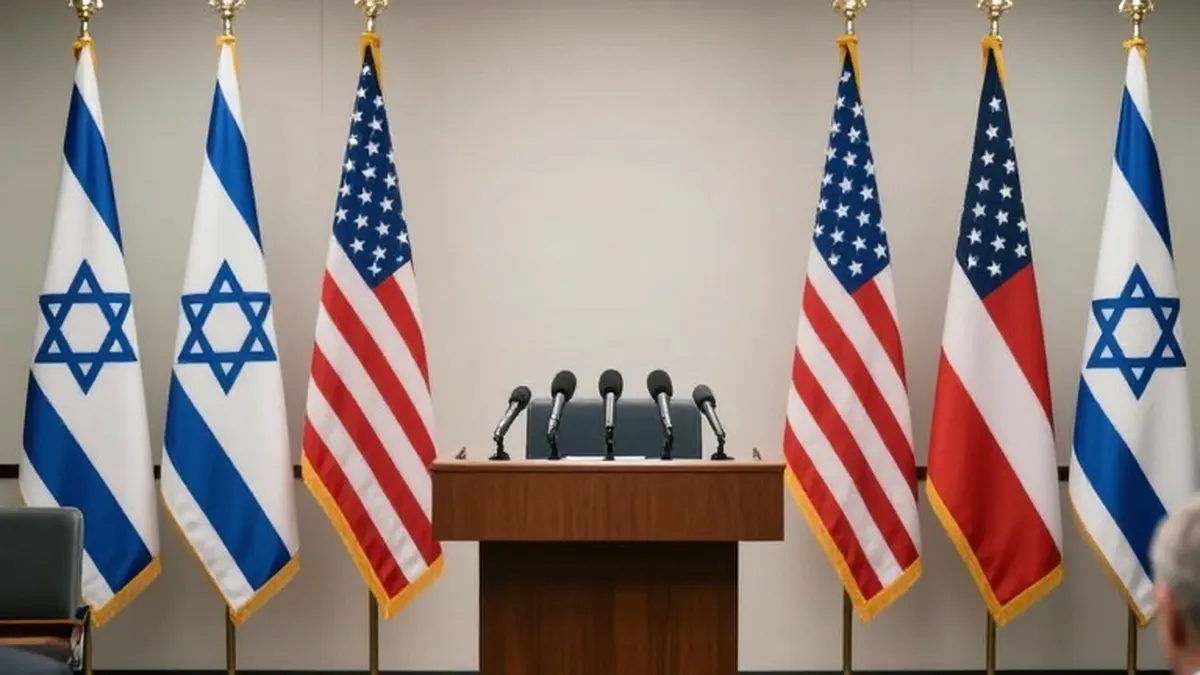
US President Donald Trump indicated on Tuesday that the financial resources allocated for the ongoing military campaign against Iran are sufficient to sustain operations until approximately the end of January. This timeline is significant because it aligns with the period when Democrats are expected to assume control of Congress, a shift that could influence the administration's ability to pursue further military actions.
In an interview with the New York Post, Trump addressed the specific objectives of the war. While he stated that the goal of toppling the Islamic Republic was likely achievable, he clarified that removing the current regime was not a primary aim of the US campaign. He emphasized that his central desire was to prevent Iran from acquiring a nuclear weapon. Trump noted that he had neither strongly supported nor opposed regime change as a specific criterion for the conflict.
The President acknowledged that his options for ordering additional strikes may become more constrained once the new congressional session begins. He argued that ending the military campaign before achieving a decisive outcome would transform what he described as a total victory into a loss. Despite this urgency, Trump did not announce a definitive decision to resume air strikes on Tuesday.
Earlier in the day, Trump characterized Iran's military status as significantly diminished. He claimed that the country now has limited capacity to fire missiles and that its overall capabilities have been badly weakened. He described the US naval blockade as the greatest in history, asserting that more oil is currently moving through the Strait of Hormuz than was the case before the war began.
Trump maintained that no Iranian ship has successfully passed through the naval blockade since it was established, with the exception of a temporary pause he referred to as a little moratorium. These remarks were part of a broader effort to highlight the effectiveness of the US strategy in limiting Iran's economic and military reach.
While the President focused on conventional military metrics, experts have raised concerns about other aspects of Iran's defense infrastructure. Kasra Aarabi, director of IRGC research at United Against Nuclear Iran, told The Jerusalem Post on Tuesday that the threat posed by Iran's chemical and biological weapons programs is growing beyond the country's borders.
Aarabi argued that the Islamic Republic has spent over four decades building extensive infrastructure for research in chemical and biological weapons. He suggested that this long-term development has received far less public attention than Tehran's nuclear ambitions, potentially leaving a gap in the broader understanding of the security challenges presented by the conflict.
The timing of the funding window and the impending change in political leadership creates a critical period for the administration. As Democrats prepare to take over Congress in January, the balance of power in Washington may shift, potentially impacting the legislative and fiscal support available for the ongoing operations in the Middle East.
Trump's comments reflect a strategy aimed at maximizing military leverage before the political landscape changes. By emphasizing the current weakening of Iran's military and the effectiveness of the naval blockade, the administration seeks to justify continued operations and secure the necessary political capital for the next phase of the conflict.
The report was contributed to by Amichai Stein, who provided additional context on the evolving dynamics between US policy and the strategic objectives of the war with Iran.