Aid groups grade Gaza peace plan a failure as winter crisis deepens
A coalition of five major humanitarian organizations has assessed the Trump administration's Gaza plan as a failure, citing expanded military control, stalled reconstruction, and severe aid shortages.
By Marina Weber ·
One year after the United Nations Security Council endorsed the Trump administration's 20-point Comprehensive Plan to end the conflict in Gaza, a coalition of five international aid organizations has released a critical assessment. The Danish Refugee Council, Norwegian Refugee Council, Oxfam, Refugees International, and Save the Children issued a humanitarian scorecard that rates the plan at just four out of 26 possible points. The document notes that the plan received a zero for humanitarian access and only one point for civilian protection.
This report was released as Israeli forces launched a new ground offensive in central Gaza. Troops advanced with tanks west of the designated Yellow Line and issued new forced evacuation orders. According to the United Nations Office for the Coordination of Humanitarian Affairs, the Israeli military's control of Gaza territory has expanded from 58 percent at the start of the ceasefire 13 months ago to 65 percent today. Israel has stated it controls 70 percent of the territory, a figure a UN official told the Security Council in June.
The expansion of the Yellow Line has confined approximately 2.1 million Palestinians to a shrinking area. Recent analysis by US news group NPR suggests the confined zone is now 109 square kilometers, creating a population density of nearly 19,300 people per square kilometer. Ramy Abdu, founder of the Euro-Mediterranean Human Rights Monitor, described the situation as an unlawful acquisition of territory by force. Since the ceasefire was declared in October last year, at least 1,650 Palestinians have been killed and 5,975 wounded.
Shaun Hughes, the World Food Programme country director for Palestine, noted that the current conditions do not feel like a ceasefire. He explained that military control over nearly 70 percent of Gaza limits space for food production, while fishing remains prohibited and unemployment exceeds 80 percent. Lilu Thapa, executive director for the Middle East, Asia, and Europe at the Danish Refugee Council, called the situation displacement by design, stating that a ceasefire allowing such expansion is merely a ceasefire in name.
The diplomatic framework known as the Board of Peace has faced intense scrutiny. Abdu argued that the body has infringed on Palestinian self-determination and serves as a political shield for Israel's occupation. He suggested that the Board's role amounts to a functional normalization of genocide and starvation. Mohsen Abu Ramadan, a board member of the Palestinian NGOs Network, agreed, stating that the Board has failed the international community by providing political cover for ongoing atrocities.
Aid flows have fallen significantly short of the plan's targets. While the agreement stipulated a minimum of 600 UN-coordinated trucks daily, an average of just 49 entered Gaza in September. Only two percent of these convoys carried medical supplies. In contrast, Israeli authorities have prioritized commercial trucks carrying expensive goods. During the week of October 12, only one of 315 commercial trucks carried medical supplies, while 223 carried food.
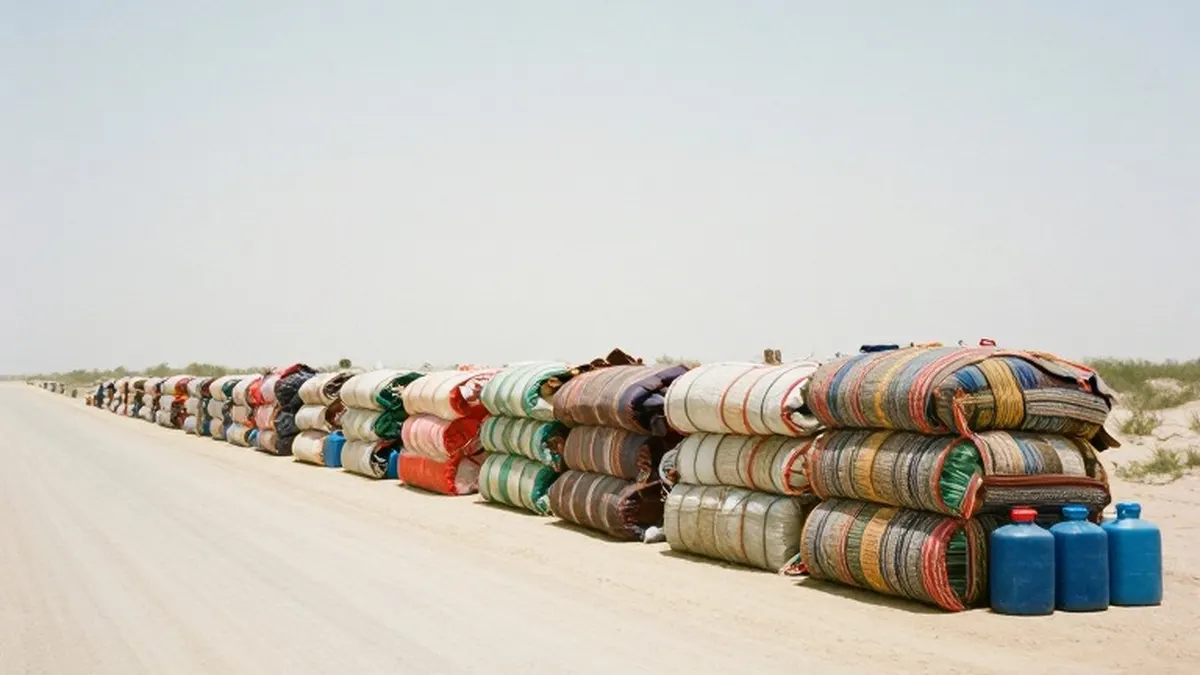
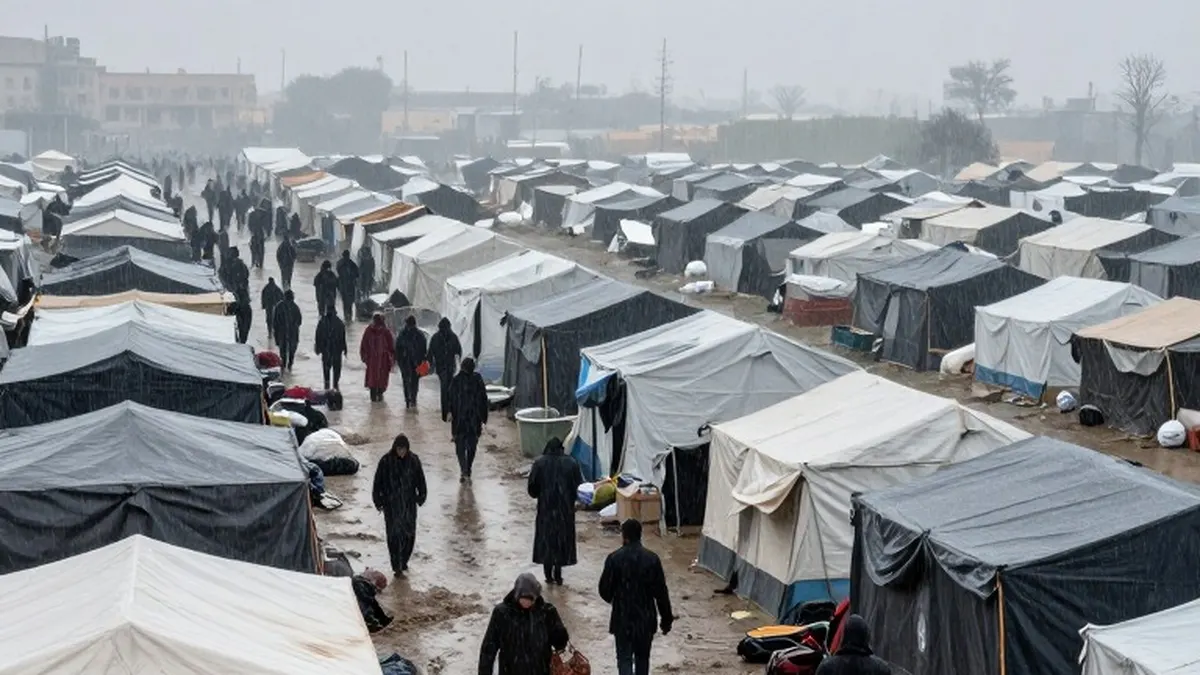
As Gaza enters its fourth winter of displacement, the shelter crisis has reached a breaking point. Despite donor pledges of 18 billion dollars, reconstruction has yet to begin, and nearly 1.4 million people live in makeshift shelters. A recent storm flooded over 70,000 tents in a single day, killing five displaced people and an infant. While stocks inside Gaza are exhausted, more than 150,000 tents and 500,000 blankets are stuck outside the borders, waiting for permission to enter.
The Board of Peace responded to these findings by sharing its latest official report, which attributed implementation delays to Israeli political indecision. The report stated that the process relies on verified results and cannot begin until Israel makes requisite decisions regarding civilian police and the entry of the International Stabilization Force. The Board concluded that a ceasefire delivering no visible results cannot be sustained indefinitely, urging Israel to act without delay.