Court urges release of Afghan journalist held in California desert
A federal magistrate recommended freeing Shaban Ali Rafat, but he remains in custody pending a December 8 hearing.
By Marina Weber ·
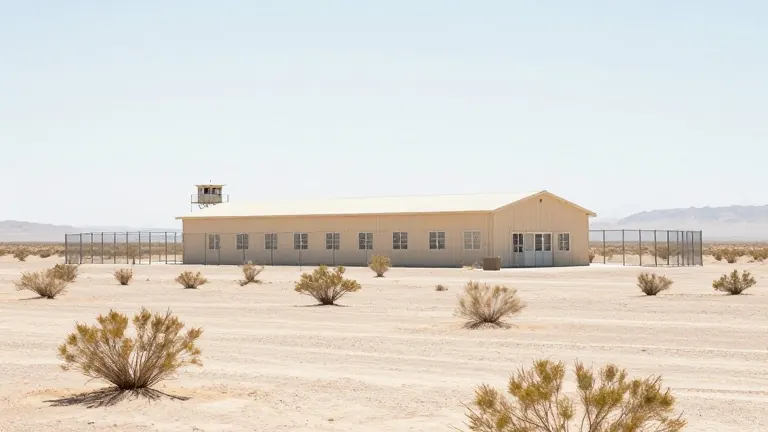
A federal magistrate in California recommended on Nov. 6 that U.S. authorities release Shaban Ali Rafat, an Afghan journalist who has been in immigration detention since early 2025. The judge for the United States District Court for the Eastern District of California suggested the move based on the strength of his asylum claim, yet Rafat remains locked in the California City Detention Facility in the Mojave Desert.
The Committee to Protect Journalists issued a formal demand this month for ICE to unconditionally release Rafat and grant him asylum. Jose Zamora, the group’s Americas regional program director, argued that sending Rafat back to Afghanistan would hand him directly to the Taliban, the very force that made his profession dangerous. Zamora noted that Rafat faces dual threats due to his media work and his status as a Hazara, a minority group the Taliban have increasingly targeted.
Before fleeing, Rafat worked as a producer and reporter for Maaref TV and served as a senior media officer at Kabul University. He covered a 2020 terrorist attack on the university and reported on the plight of the Hazara community. Since the Taliban returned to power in 2021, the group has shuttered several Hazara media outlets and arrested their leaders, creating a hostile environment for those who report on their conditions.
Rafat’s path to the United States involved a six-month wait in Chiapas, Mexico, where he was mugged and severely beaten. He then entered the country at Lukeville, Ariz., and surrendered to immigration officers. Court filings show he registered for an asylum appointment in the summer of 2024, but his case did not appear in the court system for over a year after his detention began.
David Tarr, an immigration attorney with the San Francisco Bay Area chapter of CAIR, represented Rafat after the journalist reached out in May. Tarr described the case as one of the most legitimate he has encountered, noting that an immigration officer already determined it was more likely than not that Rafat would be tortured if returned. Despite this finding, Rafat has been moved between facilities in Arizona and Washington before settling in Adelanto and then California City.
ICE and the Department of Homeland Security did not respond to requests for comment. Rafat remains in custody while awaiting a scheduled immigration court hearing on Dec. 8. His attorney expressed concern that a judge may not hear the merits of the case, pointing out that officers have told Rafat he lacks the right to asylum because of his manner of entry. Tarr emphasized that Rafat’s professional record is easily verifiable and his fear of persecution is well-established.