Prosecution calls double murder trial testimony 'fanciful' as trial enters ninth week
The crown alleges that forensic evidence contradicts the former police officer's account of a self-defence struggle, describing the claims as improbable.
By Vanessa Lopez ·
A court in Sydney has heard that the testimony provided by Beau Lamarre-Condon regarding the deaths of Jesse Baird and Luke Davies is fanciful in the extreme. The former police officer faces charges of two counts of murder and one count of aggravated break and enter. He is accused of fatally shooting Baird and his new partner, Davies, with his police service weapon inside Baird's home in Paddington on 19 February 2024. Lamarre-Condon has pleaded not guilty to all charges as the trial progressed into its ninth week.
Crown prosecutor Brett Hatfield SC began delivering his closing statement on Thursday. The defence has maintained that the two men died during a struggle in which the accused acted in self-defence. Lamarre-Condon previously told the court that he intended to shoot Baird in the shoulder to compel him to drop a knife. He claimed that he accidentally fired a second shot as the two men fell to the ground during the altercation.
However, Hatfield argued that the physical evidence contradicts this narrative. The prosecutor stated that the injury sustained from the first shot would likely cause a person to lose consciousness. He told the jury that common sense makes it highly improbable for an individual to suffer such a wound and then immediately grab a pistol with their left hand to forcefully pull a person holding it to the ground. Hatfield described this specific scenario as fanciful in the extreme.
The prosecution argued that Lamarre-Condon could be convicted based solely on forensic and ballistics evidence. Hatfield alleged that the directionality of the bullet and the nature of the wounds on Baird’s body indicated that Lamarre-Condon shot him in the back. According to the crown, Baird was fleeing towards the back door when the first shot was fired. The height of the bullet marks suggested that Baird was ducking or stooping at the time of the impact.
Further analysis of the evidence pointed to a near-vertical trajectory of the bullet as it passed through the floor. Hatfield described this as evidence of a controlled shot through Baird’s temple, labeling it an execution-style shot. The timing between the two shots allowed for only a quick two to three steps, the prosecutor noted. This timeline, he argued, did not support the bizarre wrestling and yanking described by the accused.
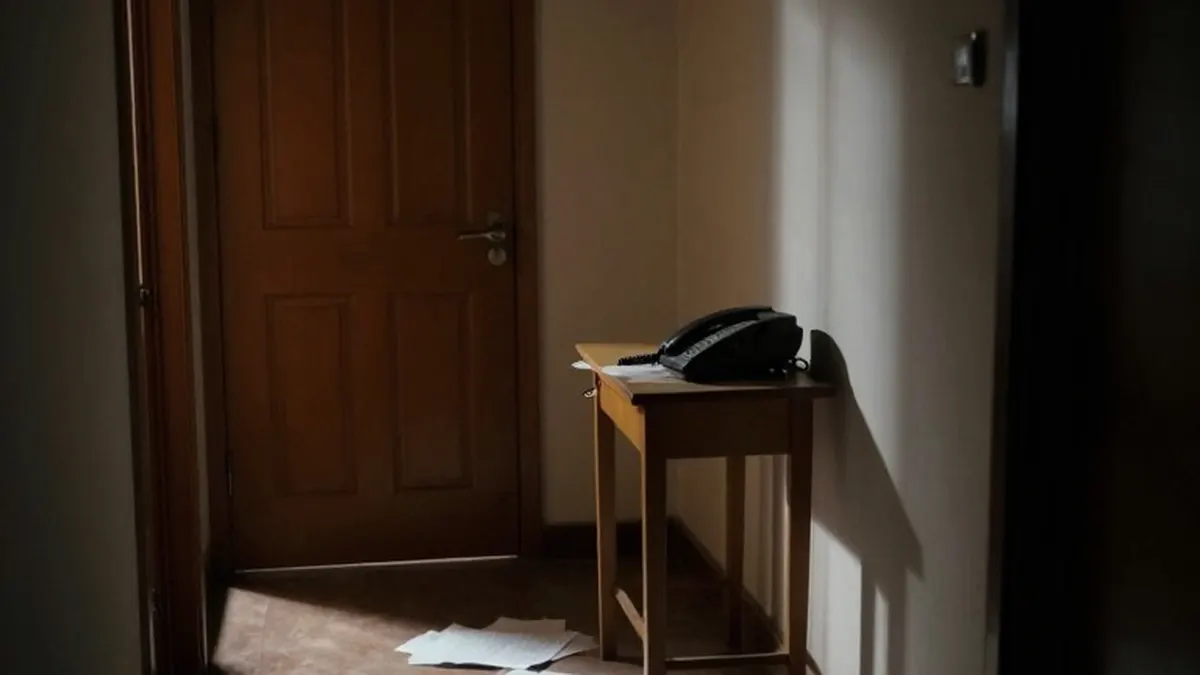
At this stage, the prosecutor stated that Davies must have realized something was seriously amiss. Hatfield alleged that Davies attempted to call triple zero before being killed by a bullet that passed through the door and into his head. Gunshot stippling was found on the door but not on the body, a detail the prosecutor used to support the claim that Davies was shot through the barrier.
Hatfield emphasized that certain aspects of the defence case relied entirely on the word of the former officer. Specifically, the claims that Baird lunged at Lamarre-Condon with a knife and that Davies picked up the gun to point it at the accused were not supported by any independent evidence. The prosecutor told the jury that nothing independent of Lamarre-Condon supports any of what he said about those events.
The trial is presided over by Justice Natalie Adams and continues as the jury considers the conflicting accounts and the physical evidence presented by both sides.