Copa America 2028 Returns to the US Amidst Debate Over South American Tradition
The 2028 Copa America will be held in the United States, offering the USMNT valuable match experience while raising questions about the balance between financial gain and traditional rotation among South American hosts.
By Vanessa Lopez ·
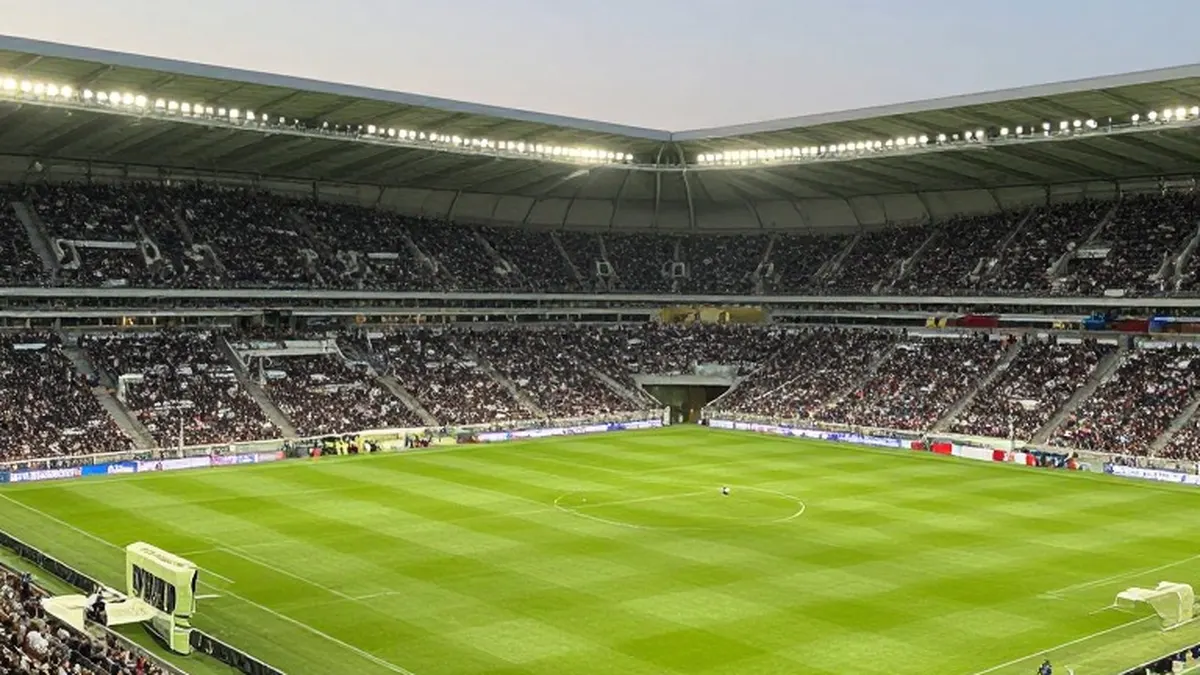
The Copa America, South America's premier international football tournament, will be hosted in the United States in 2028. This marks the third time in the last four editions that the competition has taken place in North America and will be the second consecutive edition held on U.S. soil. The previous U.S. hosted edition was the centenary celebration tournament in 2016.
Sports analysts Jeff Carlisle and Tim Vickery have examined the implications of this decision. For the U.S. men's national team, hosting the tournament presents a significant opportunity. The team has historically struggled to secure high-quality opponents within its own region due to the competitive disparity in Concacaf. While Canada, Mexico, and Panama offer consistent challenges, the level of competition drops sharply beyond those nations.
The international schedule often limits the U.S. team's exposure to diverse opponents. The biennial Gold Cup and World Cup qualifying campaigns are heavily focused on Concacaf rivals. Additionally, international match windows are frequently occupied by continental qualifying matches or Nations League fixtures, which restricts the availability of other national teams for friendly games. The Copa America provides a necessary break from this regional focus, allowing the U.S. to face unfamiliar and often superior opponents, such as Argentina and Brazil.
The U.S. team's failure to advance past the group stage in the 2024 edition, which included a loss to Panama, underscores the value of tournament experience. Currently, the U.S. program is undergoing a transition. A new manager is being sought, and a fresh generation of players is entering the international scene. The 2028 tournament will serve as a critical platform for the coaching staff and players to adapt and determine which tactical approaches are most effective.
A minor logistical challenge arises from the fact that the U.S. will also host the Olympic Games in 2028. Although the Copa America holds greater prestige in football, the Olympics attract significant domestic attention. U.S. Soccer has appointed Steve Cherundolo to lead a primarily under-23 Olympic squad. However, the strong performances of young players like Julian Hall and Cavan Sullivan may lead to a situation where the full national team borrows players from the Olympic roster.
Tim Vickery highlights the tension between tradition and financial gain within CONMEBOL. The Copa America, first played in 1916, has a complex history. It was revived in 1987 following a period of disuse, coinciding with the return of democratic governments in the region and the growth of televised football. In the years following its revival, the tournament rotated through various South American hosts, including nations hosting the event for the first time, which boosted national morale and stadium construction.
However, this rotation has stalled. After Argentina, Chile, and Brazil hosted the tournament, the schedule has favored the United States. Ecuador, which was next in line, is still waiting for its turn. The 2016 edition was initially seen as a unique event for the centenary, justified by the U.S.'s infrastructure and the expansion of the field to twelve teams by including more Concacaf nations. The 2024 edition was promoted as a preparation tool for the U.S. World Cup bid and a chance for South American teams to acclimate to conditions.
The decision to host the 2028 edition in the U.S. is driven primarily by financial incentives. The United States offers large-capacity stadiums and a market accustomed to dynamic ticket pricing. While CONMEBOL cites the need for resources, the decision raises questions about the fairness of extracting higher costs from fans. In a twelve-year span, the tournament will only have been played in the U.S. and Brazil, with only token appearances by Argentina, Paraguay, and Uruguay in the upcoming World Cup.
This arrangement has sparked debate about the sustainability of the current model. While generating revenue in the U.S. is beneficial, there is a growing desire for investment and tournament presence within South America. Countries like Colombia, which view themselves as potential future World Cup hosts, may find the current state of affairs difficult to accept. The selection process for the 2032 Copa America, the next scheduled edition, is expected to become a politically sensitive issue.
More News · National news · Report a business · Got a Story?